Brands have long relied on identity systems, campaigns, and messaging to define themselves. Today, what defines them most is what customers experience and share. Traditional elements like colors, fonts, and slogans still matter. But real connection comes from human expression. From stadium chants to viral TikToks, modern branding focuses on experiences over mere impressions. The true power of branding lies in fan-created video and storytelling, especially in sports and events. Forward-thinking brands are increasingly embracing structured user-generated content (UGC) to enhance these authentic experiences.
Experiences Over Impressions: The New Branding Reality
Fans in a stadium create an electric atmosphere, illustrating how the emotion and energy of real experiences define a brand more than static logos or slogans.
The brands you remember most likely aren’t the ones with the cleanest logos. Was it because of a logo you saw, or was it due to a memorable experience you had? Chances are, it was the experience, the feeling of being part of something. Branding leaders are starting to admit something uncomfortable: a brand is an experience, not a logo. In other words, no single visual mark or tagline can capture the full story of a brand. You are defining your brand in an ongoing story. Customer interactions, events, and community moments is how you create your story. As sports branding consultant Ken Black puts it, a team’s brand “should unfold over time, with its own story arc, legendary moments and mythological tales,” expressed through every fan touchpoint.
This is a dramatic shift from the old marketing playbook. In the past, we measured success in impressions, how many people saw your billboard or your logo on a banner. But visibility alone doesn’t equate to connection. Today, it’s less about plastering a logo everywhere and more about fostering an emotional bond. As one experiential marketing director said, “It’s less about logo visibility, more about experience and connection”. A fan feeling goosebumps at a championship game defines the brand. So does a customer unboxing a product on video. These experiences shape how people see you.
Fan Stories and Rituals Define Modern Brands
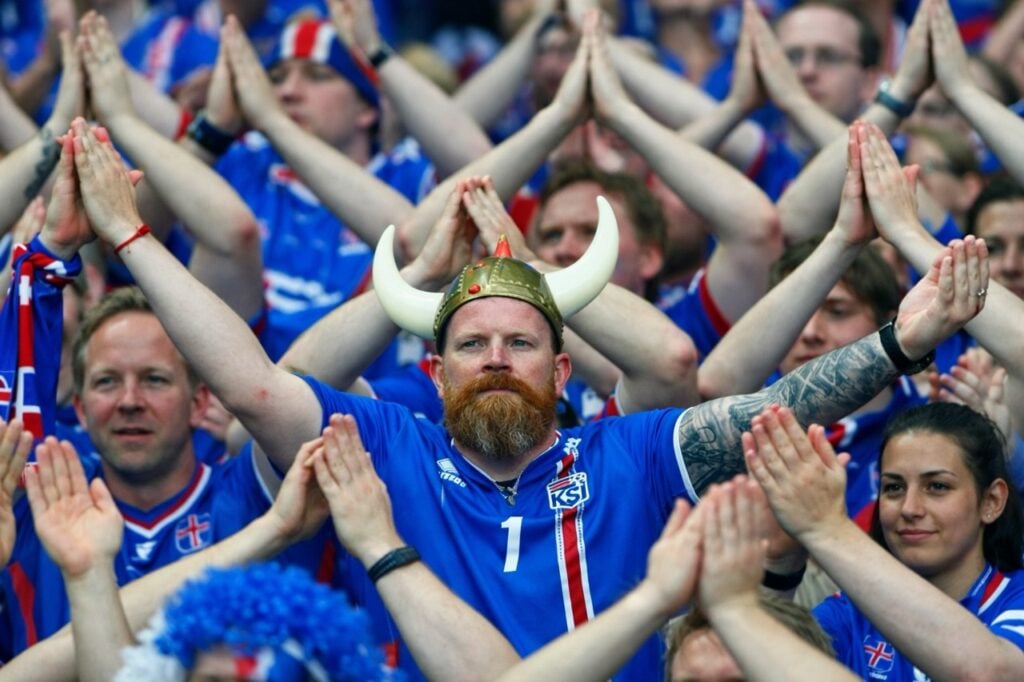
Iceland’s supporters performing the “Viking clap” at a World Cup match, a fan-driven ritual that became a defining symbol of the team’s identity and passion.
Nowhere is the power of experience-driven branding more evident than in sports fandom. Fans don’t just consume a brand; they contribute to it. The traditions, chants, and rituals fans create become core parts of a team’s brand story. For example, the Viking “thunder clap”, a dramatic, slow-building chant started by Iceland’s soccer fans, became a global phenomenon during Euro 2016. A tiny country’s fan ritual, not any official marketing, put them on the world map of football culture. It was so powerful that supporters of other teams around the world adopted it in their own way. Similarly, think of the iconic songs sung by Liverpool supporters or the post-win rituals of college football fans (like the now-famous Kinnick Wave at Iowa, where the whole stadium waves to children in a nearby hospital). They are authentic because they bubble up from the community.
Fan-driven rituals and stories give brands a depth of meaning that can’t be fabricated in a boardroom. They are authentic because they bubble up from the community. When a group of fans starts a tradition, whether it’s a chant, a celebratory dance, or a heartfelt gesture, it becomes part of the brand’s mythology. These stories get retold in highlight videos, news articles, and social posts. They spread far beyond the stadium. The community becomes the co-author of the brand narrative. Brands that recognize this encourage it; those that ignore it risk seeming stale or out of touch.
Turning Fans into the Main Event: Lessons from the Pop-Tarts Bowl
Great brands don’t just allow fan expression; they actively embrace and elevate it. A striking recent example comes from college football. When the toaster pastry brand Pop-Tarts took over sponsorship of a bowl game, they didn’t treat it as just another logo placement opportunity; they turned the entire event into a fan-centric experience. The result was the Pop-Tarts Bowl becoming a viral marketing masterclass in just two years. How did they do it?
For starters, Pop-Tarts made themselves part of the fun. They introduced an “edible mascot,” which was a giant frosted Pop-Tart character that was actually edible after the game. Fans in the stadium got to literally take a bite out of the mascot, a quirky stunt that flooded social media with memes, videos and chatter. It’s hard to imagine a static logo generating that kind of buzz. Pop-Tarts also ran social media challenges inviting fans to share creative concoctions and ideas. Then they featured that fan-submitted content on the stadium Jumbotron during the game. In other words, fans were not just spectators; they became part of the story.
The Pop-Tarts Bowl shows what happens when a brand stops acting like a sponsor and starts becoming part of the event itself. Instead of settling for logo placement, Pop-Tarts embedded its product into the game’s rituals in a deliberately playful way. The result wasn’t just visibility, it was participation.
The brand gave fans something to do, not just something to watch. Interactive challenges encouraged collaboration, and unexpected moments sparked social sharing. By prioritizing fan joy over logo control, the Pop-Tarts Bowl generated massive organic reach and turned a sponsorship into a cultural moment.
Fan-Created Video: The Most Trusted Brand Content
Fan-created expressions are powerful for one simple reason: people trust people more than brands. Today’s consumers are savvy. They skip ads. But they consume content from other fans that feels real. Research consistently shows that user-generated content (UGC) is one of the most trusted forms of marketing. According to Nielsen, 84% of consumers trust peer recommendations more than ads. That means a video of a real fan cheering or reviewing a product carries more credibility than the slickest corporate ad. Another study found that 79% of people say UGC from real customers highly impacts their purchasing decisions.
The Trust Gap Between Brands and People
It’s not just word-of-mouth anecdotes; there’s data behind the power of UGC. One 2023 industry report found that authentic user-generated content is considered the single most trustworthy source of information. It is ranked above even content from paid “creators” or the brands themselves. It makes sense: a fan’s celebratory post or a customer’s unboxing video feels like a genuine personal story. A polished ad, on the other hand, is understood to be a curated message.
The Performance Case for Fan-Created Video
- UGC campaigns typically outperform brand-created content in engagement rate
- Structured video submissions reduce paid production costs
- Fan-created content increases time-on-page and social dwell time
- Authentic video increases conversion in product environments
Crucially, video is the medium driving this trend. Human stories feel more alive on video than in text or images. The rise of TikTok, Instagram Reels, YouTube Shorts and other short-form video platforms reflects our appetite for real, engaging video content. By 2026, video is expected to account for 82% of all internet traffic, much of it short, snackable clips. For brands, this means the strongest impressions often come from videos others create about you. A fan’s reaction video from the stands or a supporter’s creative highlight remix can deeply influence how others perceive your brand. These videos carry emotion, spontaneity, and authenticity – qualities that traditional ads often lack. Brands that tap into this, by encouraging and sharing UGC, find that they not only reach wider audiences but also build trust and community in the process.
Scaling Fan Storytelling with Structured UGC
At this point, the shift toward fan-created video should be obvious. But a practical question arises for marketing leaders: How can we actually harness and scale these fan-created stories? Viral moments are great, but you can’t build a strategy on hope. This is where a structured approach to UGC comes in. Forward-looking brands do not leave fan content to chance. They guide and organize UGC campaigns so fans can participate creatively while keeping content aligned with brand and legal standards.
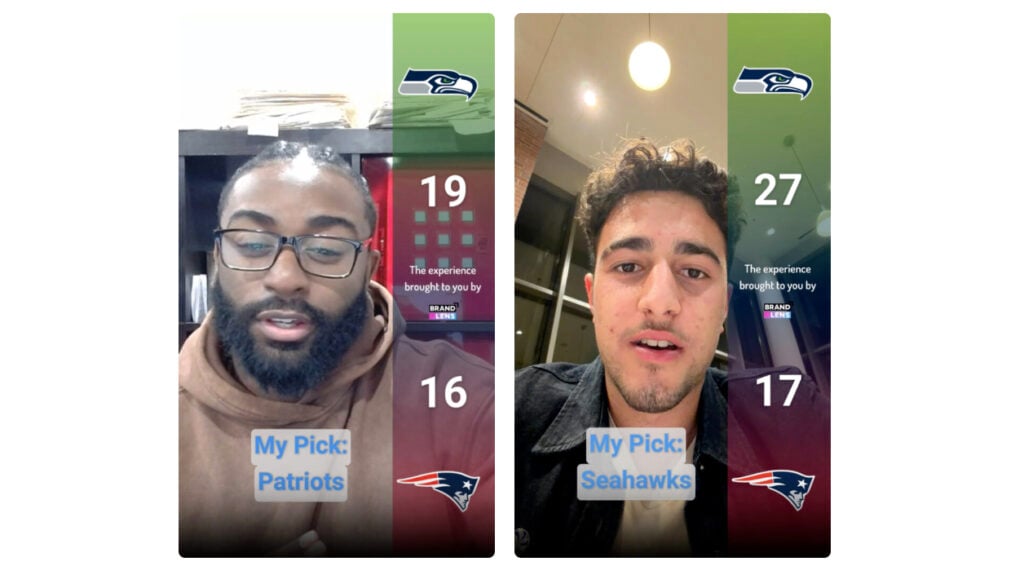
Many consumers actually want guidance. More than half say they wish brands would tell them what kind of content to create and share. Fans are often eager to participate; they just need a clear prompt. Brands can respond by launching simple, structured challenges: share a team ritual, predict a score, or tell a first experience story. Creativity and completion rates increase when participation is guided, creativity increases. And when tools make recording frictionless through a quick link or QR code with no app required, contribution becomes effortless.
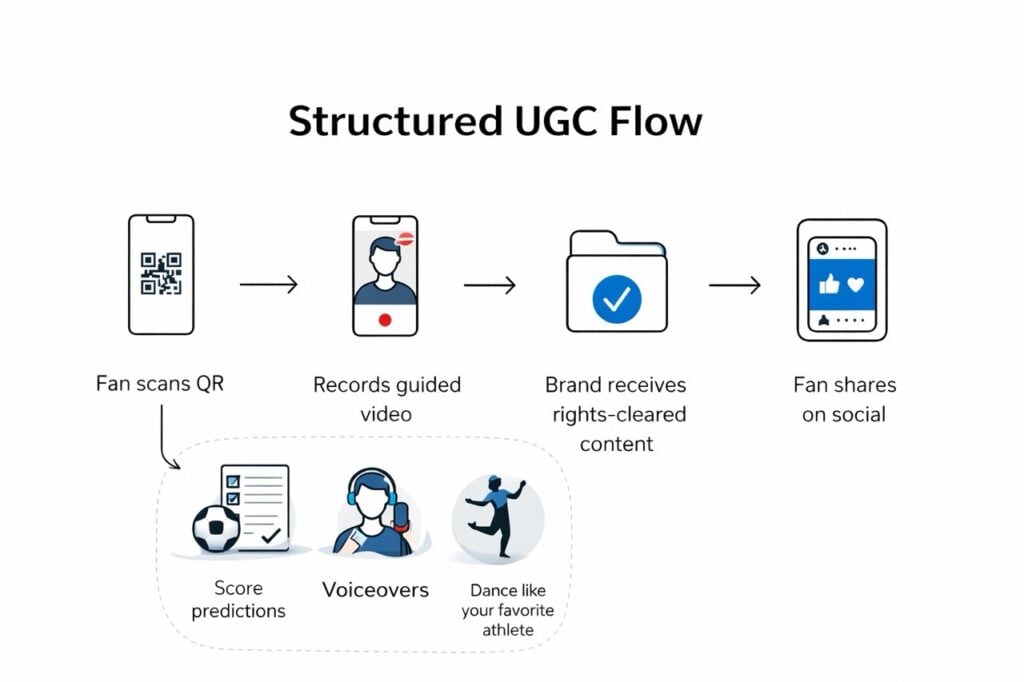
Turning Fan Participation into Repeatable Infrastructure
Platforms like BrandLens help companies operationalize this approach. Marketers can launch guided video templates with built-in prompts and branding in minutes. Fans record easily, even without production skills, because the experience is structured and co-created with the brand. The result is an authentic fan-created video that is permissioned and ready to use. Consent, rights, and legal terms are embedded upfront, so content can be repurposed without compliance concerns.
- Owned content pipelines
- First-party video content
- Rights-cleared content libraries
- Reusable activation inventory
From Framework to Real-World Execution
To illustrate, imagine a sports team giving fans a template to create their own digital “trading card” highlight video. BrandLens is rolling out these “Fut Card” campaigns. Soccer fans make personalized video highlight cards for their favorite team or country. These cards serve as keepsakes and are shared on social media. Fans use a template to record their best goal reactions and add fun statistics. They can instantly generate a slick highlight card video. This is enjoyable for the fan and beneficial for the brand. Each fan-made video acts as a micro-ad celebrating the event, likely to be shared enthusiastically.
As the BrandLens platform describes it, you can invite fans to “build custom video trading cards” that are fun and easy to share. By guiding fans through creative prompts (like reenacting a famous play or sending a good-luck message to the team), brands collect authentic stories at scale. Thousands of short clips from real people can be compiled and reposted across official channels. The result is a campaign built from real fan voices.
Authenticity at Scale
What makes this approach especially powerful is that it preserves authenticity while adding structure. The content is still coming straight from fans’ hearts and minds – it doesn’t feel staged or overly polished (which, as we discussed, can erode trust). Yet the brand isn’t completely hands-off; you’re steering the narrative gently by setting the theme and format. The result is the best of both worlds: authentic fan creativity that also aligns with your brand message. And because it’s structured, you can ensure diversity of participation (e.g. prompts that appeal to different segments of your audience) and maintain quality standards. During events like the FIFA World Cup or Super Bowl, this approach captures fan reactions in real time. Those videos can quickly become highlight reels, social stories, or even live broadcast content. It’s a far cry from the old model of simply filming a crowd and picking a few reactions; the fans hold the camera, and they are the storytellers.
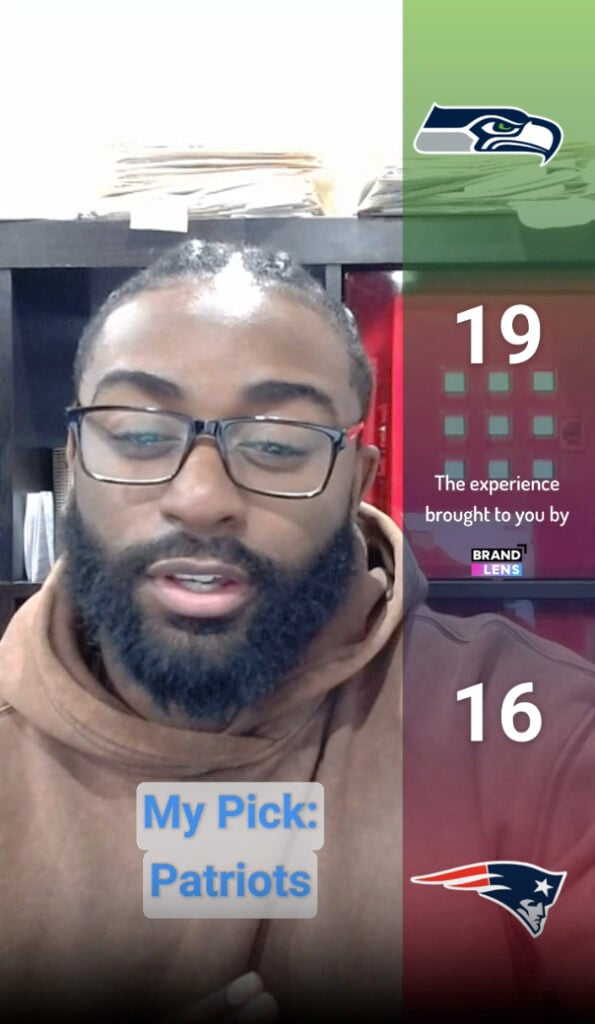
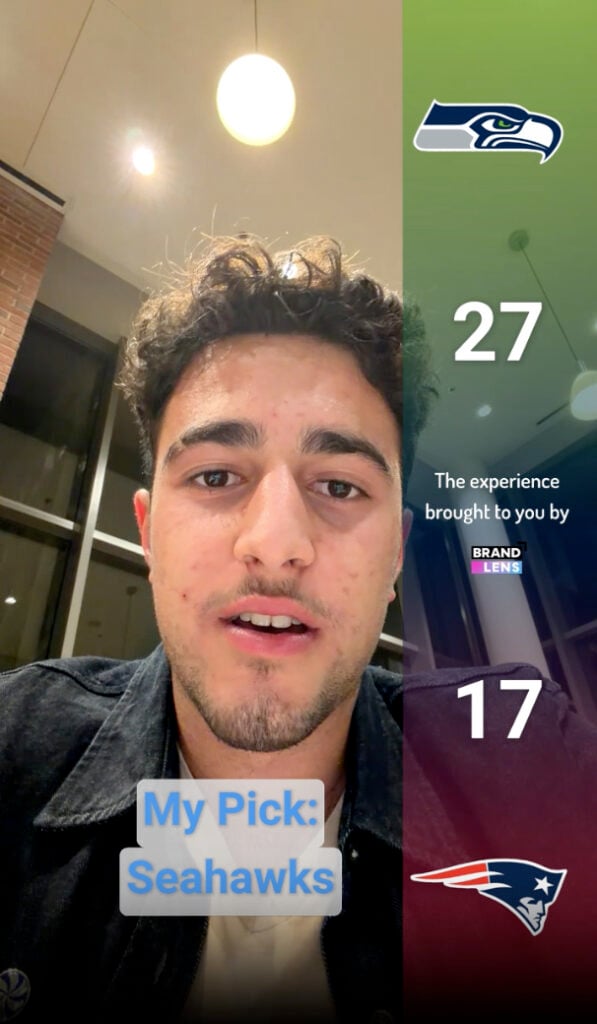
Structured fan video campaigns also generate measurable engagement data, such as participation rates, completion rates, share velocity. These turn the brand storytelling into trackable performance.
Conclusion: Embrace the Era of Fan-Created Brands
The Power Has Shifted to the Audience
A brand is no longer defined by what you say about it, but by what your customers say about you. Their experiences are your brand. Their videos, posts, and fan-created content are the new brand assets. In a world flooded with AI-generated visuals, real human video stands out even more. Wise marketers are learning to move from being mere message-senders to becoming facilitators and curators of customer stories. This shift isn’t just a feel-good notion; it’s backed by engagement numbers, trust metrics, and the cultural zeitgeist of a generation that values authenticity above all.
Making Fan-Created Video a Core Strategy
For marketing leaders, the call to action is bold and exciting: make fan-created video experiences a central part of your strategy. Don’t relegate UGC to a footnote or occasional experiment. Actively plan campaigns that put your customers in the director’s seat. Invest in the platforms or initiatives that allow you to collect and spotlight those stories seamlessly. Think about the communities around your brand – the sports fans, the hobbyist groups, the passionate customers – and imagine what rituals or creative sparks you could ignite among them. Every brand has its “fans,” and every fan has a story. Your job is to invite those stories, celebrate them, and weave them into your brand’s narrative tapestry.
In an age where a single sincere video from a fan can influence more buyers than a million-dollar ad spot, doubling down on fan-driven content isn’t a risk; it’s a smart evolution. When you structure and scale customer videos, you create a steady stream of authentic content. That content builds trust and loyalty. More importantly, you show your audience that you hear them and see them. When customers feel that they are part of the brand’s story, not just targets of it, engagement increases, communities form, and loyalty compounds.
Customers Become The Story
So, as you plan the next quarter or the next big campaign, ask yourself: How can we make our fans the stars? Those who answer that question earn not just impressions, but a lasting impact. Your logo will always matter as a symbol – but the true meaning of that symbol will be defined by real people’s voices and experiences. Brands that embrace this shift win. Your brand’s future lies in the stories your customers create for you – give them the canvas, and watch your brand’s legend grow.
CTA: Marketing leaders, it’s time to reimagine your brand playbook. Instead of planning only campaigns for your customers, plan campaigns with your customers. Find ways to structure and scale fan-created video experiences and put them at the heart of your marketing strategy. Let your biggest fans and your loyal customers help tell your story. They are ready to share – and the world is ready to listen. Now it’s up to you to hand them the mic or the camera. Then watch where that energy takes your brand. The brands that win tomorrow will be those that turn their customers into creators today. Will yours be one of them?