Most brands do not need more random user-generated content. They need better direction before anyone starts recording. That direction usually starts with UGC creative briefs. The brief explains what the brand is asking for, who should participate, what kind of story matters, and what the final video should include. In creator marketing, this is already familiar language. Brands use creative briefs to align creators around objectives, messaging, format, usage rights, and guardrails.
But video UGC needs a second layer that most brands still miss: on-camera instructions (UGC Prompts).
A creative brief tells someone what the assignment is. On-camera instructions help them complete it while they are actually recording. When those two layers work together, UGC becomes clearer, more compliant, and much easier to use at scale.
Why UGC Creative Briefs Matter
UGC has become its own discipline, not simply a softer version of influencer marketing. The IAB has treated user-generated content as a distinct marketing and advertising category, and platforms like Sprout Social describe UGC as content created by customers rather than brand teams or traditional advertisers.
That distinction matters because real UGC depends on the participant’s voice. A customer, fan, employee, or community member should not sound like a brand script. At the same time, authenticity does not mean asking people to “send us a video” and hoping the result is usable.
The better approach is structure without over-control.
A strong UGC creative brief gives participants the context they need. It should explain the purpose of the campaign, the audience, the story angle, the preferred format, the length, the do’s and don’ts, and any rights or disclosure requirements. For brands still clarifying what counts as real UGC, this starts with understanding what user-generated content actually means.
UGC Creative Briefs are Not the Same as On-Camera Guidance
This is the key difference.
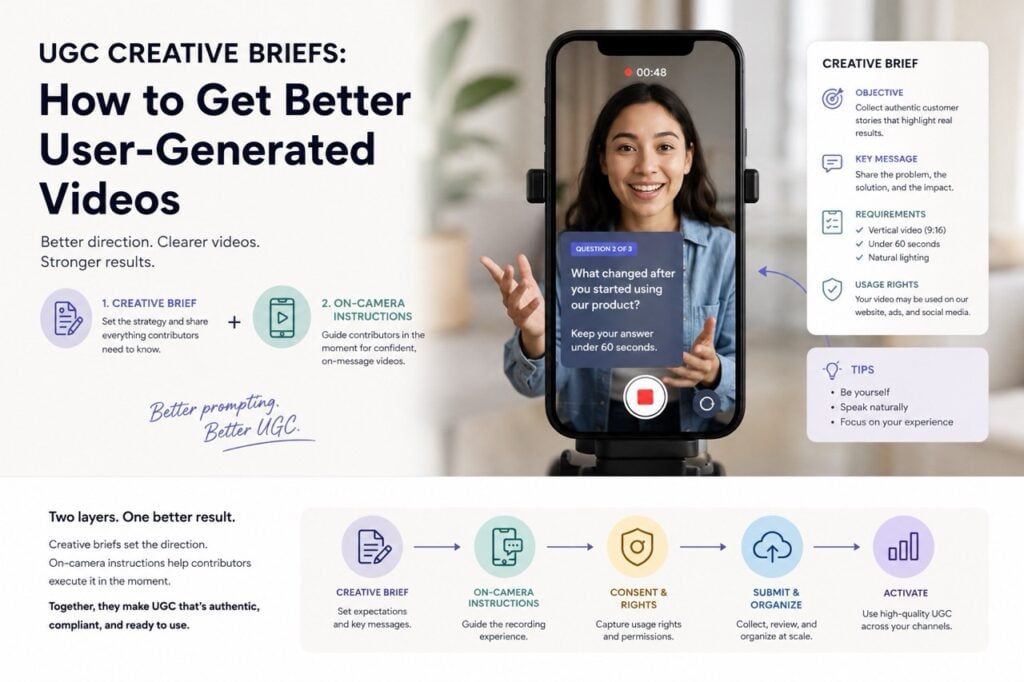
A creative brief is usually read before recording. It gives strategic direction. It might tell the customer or creator to talk about their experience, mention a product benefit, avoid certain claims, record vertically, and keep the video under 60 seconds.
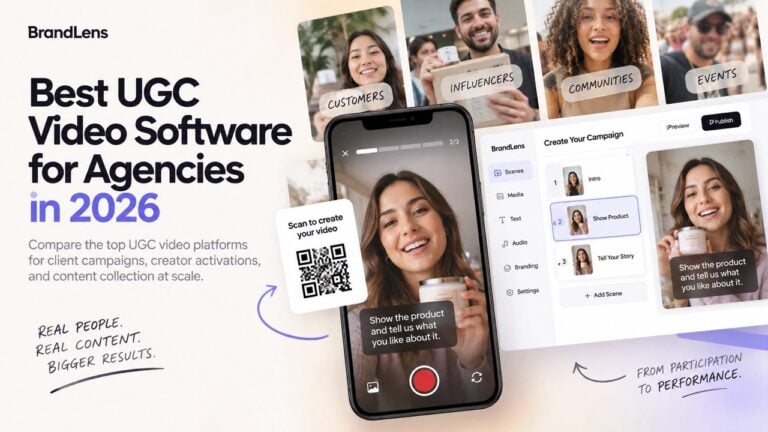
On-camera instructions appear during the recording experience. They guide the participant in the moment. That can include teleprompter-style cues, one question at a time, visible talking points, countdowns, branded overlays, pre-made visual layers, disclaimers, or scene-by-scene prompts.
The brief explains the assignment. The camera experience helps people execute it.
This is where many UGC programs break down. People skim briefs. They forget details. They start recording and lose the thread. They miss the required message, ramble for too long, film in the wrong orientation, or submit something that feels almost right but cannot be approved.
A PDF brief cannot fix that moment. Guided capture can.
Better Prompting Means Better Compliance
In UGC, compliance is not only a legal issue. It is also a creative and operational issue.
Did the participant answer the right question? Did they include the required detail? Did they avoid unsupported claims? Did they stay within the time limit? Did they record in the right format? Did the brand capture the right consent before using the video?
Compliance becomes even more important when UGC overlaps with reviews, testimonials, or paid creator relationships. The FTC’s Consumer Reviews and Testimonials Rule makes clear that fake, false, or deceptive testimonials create real risk for brands. This article is not legal advice, but the direction is obvious: brands need cleaner workflows for how testimonial-style content is requested, captured, approved, and reused.
That is why prompting should not be treated as a line of copy above an upload button. Better prompting includes the creative brief before recording and the on-camera experience during recording.
Why On-Camera Instructions Improve Video Quality
User-generated videos are created by real people in real environments. That is part of their value. It is also why quality varies so much. Even YouTube maintains a large-scale UGC dataset for video quality and compression research, because non-professional video has different quality challenges than polished production footage.
For brands, the issue is practical. A great customer may have a great story but still submit a video that is too dark, too long, off-message, or difficult to edit.
On-camera instructions reduce that risk. A participant can be guided through one question at a time. The experience can remind them to face the camera, keep the answer short, include a specific point, or follow a branded structure. Pre-made layers and overlays can keep videos visually consistent without requiring the participant to edit anything.
This does not make the content fake. It makes participation easier.
The Strongest UGC Uses Both Layers
The best system is not creative brief versus on-camera instructions. It is both.
The creative brief sets the strategy. On-camera guidance turns that strategy into a usable submission. Together, they help brands collect videos that are still authentic, but far less random.
This is the next level of collecting user-generated content at scale. The goal is not to control every word. The goal is to remove the blank page, reduce preventable mistakes, and make participation feel simple for the person recording.
BrandLens is built around this second layer. Organizations can create guided video submission experiences with overlays, prompts, voice instructions, and step-by-step creative briefs, so customers and creators are not left to interpret a static brief on their own.
Good UGC should not feel scripted. But it should be guided.
The brands that understand this will collect better videos, approve them faster, and build UGC systems that are easier to repeat.