UGC cost extends well beyond what a creator charges to film a video. Hiring creators can add licensing, shipping, platform fees, and editing to the budget. Customer video collection has its own costs, including software, outreach, incentives, and staff time. This guide compares UGC creator rates with the full cost of collecting customer videos. It uses published prices and clear budget examples to help you calculate the cost per usable video.
How much does UGC cost?
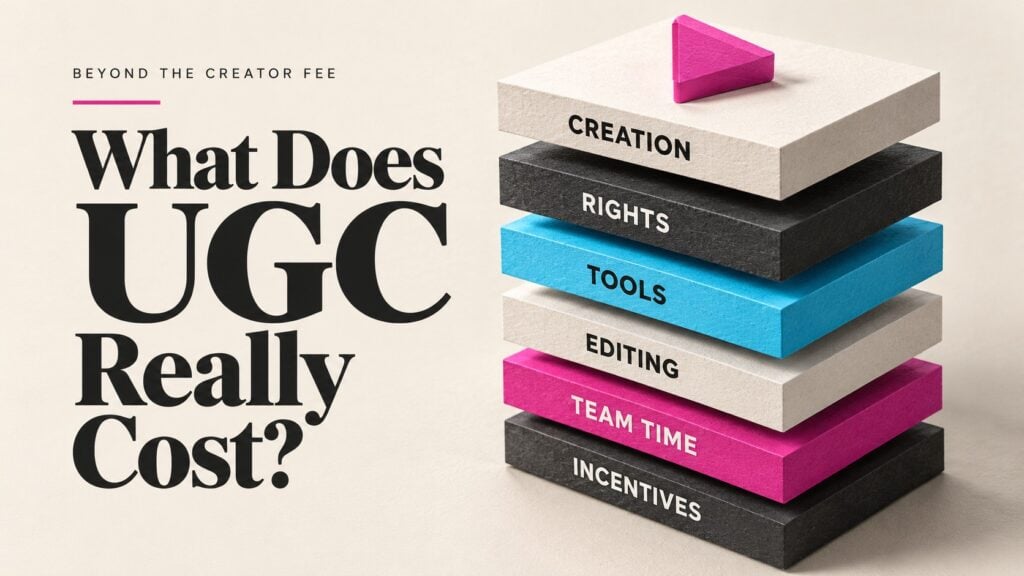
For hired creators, count filming, usage rights, platform fees, products, shipping, staff time, and extra edits. For customer videos, count outreach, software, rewards, consent checks, review, and final edits.
These examples show how published prices differ:
Prices were checked on October 8, 2026. Amounts are in US dollars. Taxes, add-ons, billing commitments, and delivery terms can change the final amount.
soona’s published UGC video prices give brands a clear starting point. Its range covers creator levels, so check the scope your brief needs.
Collabstr’s 2026 marketplace report reports an average UGC payout of $154 per collaboration. Its data covers more than 21,000 deals across content types. That UGC figure reflects deals on one platform, rather than a fixed rate for one clip.
Insense’s platform pricing shows how software and fees can sit on top of creator pay. Its Brand plan is billed every three months.
For broader UGC creator rates, Insense’s creator cost guide suggests $50 to $500 per short video. Rights, specialist skills, and complex production can increase that figure.
Creator fees and customer video collection buy different things
A hired creator sells their time and skills. The fee may cover scripts, filming, product demos, edits, and changes agreed in advance. Posting to their own fans is a further service, with its own terms and fee.
Customer video collection draws on people who use your product or service. They can show how it fits their lives. A strong clip might show the product in use or explain a problem it helped solve.
The market often calls paid creator work UGC. Real customer content comes from actual users. Their personal experience should guide the message.
Commission creators for a specific advertising brief. Invite customers to share their own experiences. Many brands need both, with separate budgets and quality standards.
A system for collecting user generated content at scale lets you reuse the work behind each request. Build the prompts once, then share them with more people. Costs fall per clip only when people take part and send work you can use.
What drives UGC cost beyond the creator fee?
Finding people and getting them to participate
Finding creators takes time, even when search tools help. Someone must check fit, agree on terms, and track when work is due. The quote rarely shows all that staff time.
You also need a way to reach customers. Count email or SMS costs, website space, print costs, and any paid ads. People who own the product need no free sample, but they still need a reason to take part.
Products, shipping, and incentives
If creators need a product, count its cost plus packing, shipping, duties, and lost or damaged parcels. Use your cost of goods, rather than the retail price. Returns and overseas shipments can add more work.
Customers may participate without payment when the request feels enjoyable or meaningful. Others need incentives. Count reward fulfillment, payment fees, and currency conversion where relevant.
Rewards for reviews and testimonials need clear terms. FTC guidance on incentivized reviews says rewards must not depend on praise. Disclose rewards that could affect how readers weigh a review. Sites where you publish may have stricter rules.
Usage rights and distribution
A filming fee may not cover all future uses. Agree where you can publish, for how long, and what changes you can make. Rights for paid ads, exclusive use, or ads through a creator’s account may cost extra.
Some quotes include broad rights. Read the terms before adding more fees to your budget. Customer clips also need consent for intended uses, plus rights for music or other third party content.
Staff time, review, and revisions
Use a loaded hourly rate that includes salary, benefits, and overhead. Track briefing, messages, support, consent checks, moderation, revisions, and approvals. Tools assist these tasks, but people make final decisions.
A vague request wastes time for everyone. Good UGC creative briefs state the goal, shots, length, and key rules. People need prompts they can follow while they film.
Editing and storage
State whether you need raw footage, a simple clip, or a finished ad. Captions, music, translations, alternate hooks, and aspect ratios can add work. Do not count the same edits twice if the quote covers them.
Check storage, downloads, seats, branding, links to other tools, and plan limits. A plan that counts seconds holds fewer long clips than short ones. Match the plan to the length you need people to film.
Add agency management, specialist review, and reporting when required. Paid ads have their own media budget. Include that spend when you track the full cost of the campaign.
How to calculate UGC cost per usable video
The most useful starting metric is simple:
Cost per usable video = total content program cost ÷ videos approved for the intended use.
Add all costs, from software and fees to rewards, outreach, shipping, rights, staff time, and edits. Then add other services and taxes where due. Count each approved clip once.
Define “usable” before launch. The recording must meet your content, technical, consent, and publication requirements. A downloaded file alone does not qualify.
Suppose a program costs $3,000 and collects 100 videos. If only 60 qualify, each usable video costs $50. If 90 qualify, the figure falls to $33.33.
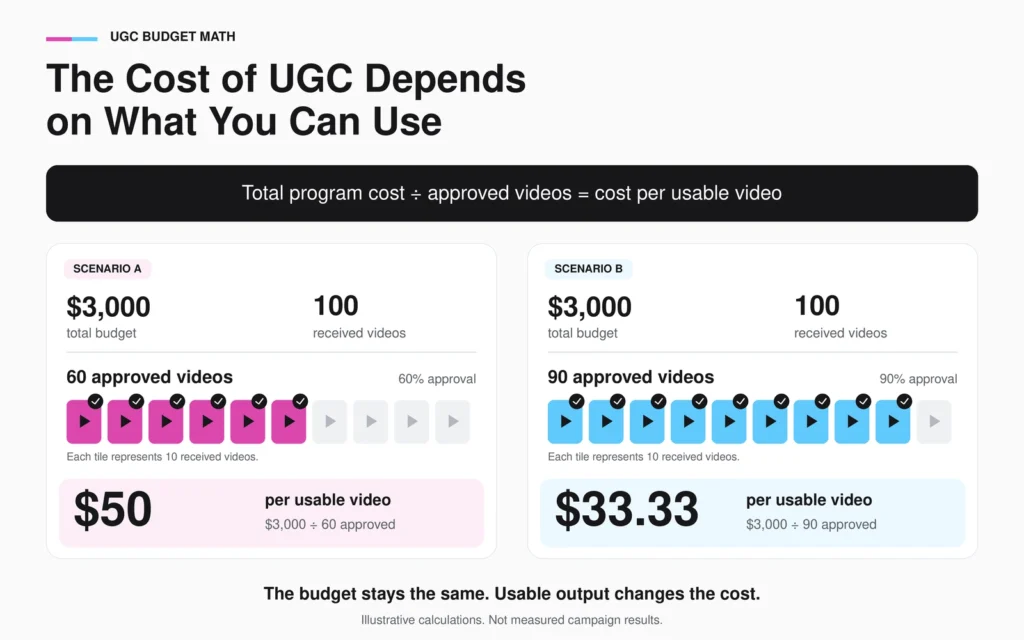
These are illustrative calculations, not measured results. Quality matters alongside volume. A cheap collection process can become expensive when most recordings need repairs.
An example budget for 100 videos
The budgets below model 100 received videos. One hires creators; the other asks customers for short product stories. Each buys a different kind of content.
All figures are planning assumptions except the $249 BrandLens plan. Staff time uses a rate of $50 per hour, including benefits and overhead. The creator budget assumes the fee covers agreed usage rights.
The customer budget assumes 100 completed submissions from an existing audience. Rewards go to everyone who completes the task, regardless of content selection.
If 5% of those you invite send a clip, you need 2,000 invites to get 100. At 1%, you need 10,000. These are planning assumptions, rather than benchmarks. Check whether your audience and delivery budget support the goal.
The software figures count one month of cost. A three month contract may need more cash upfront. Neither budget includes taxes, media spend, or agency fees.
Both budgets include extra editing. Quotes may bundle costs differently, so remove duplicate charges. Customer content still requires review, even without production fees.
These totals model different content libraries. They do not prove that customer clips can replace finished ads. Judge each approach against its intended purpose.
How guided recording can improve the economics
People can send better footage when they know what to do as they film. A prompt can ask for one clear example. A guide can show where to hold a product or when to switch shots.
BrandLens lets teams build those guides into the camera experience. Its timeline supports prompts, overlays, assets, and audio guides. People follow a link or QR code, film in their browser, and send clips into one library.
Guidance can prevent common mistakes before submission, reducing requests to record again. Measure completion rates, review time, and usable output. Those results reveal whether guidance improves your costs.
The Team plan covers 5,000 collected video seconds monthly. One hundred 30 second submissions use 3,000 seconds. One hundred 60 second submissions exceed that allowance. Annual billing is $2,400 upfront, equivalent to $200 monthly.
Choose software for the work and volume you need. Advanced review tools or other features may need a higher plan. A low monthly price helps only when the plan supports the work.
Which approach should you fund?
Hire creators when you need skilled filming, specific scenes, firm deadlines, or finished ads. Pay for reach when you need them to post to their fans. Agree on the work and rights before you compare quotes.
Collect customer stories when you need to hear from real users. It works best when you can reach them and give them a clear reason to take part. Build a process you can reuse if those stories are a long term goal.
Start with a small test, track the full cost, and count the clips you can use. Then refine your prompts, outreach, rewards, and plan. Teams can weigh guided customer video collection plans against the needs that test reveals.
Frequently asked questions about UGC cost
How much should a brand pay a UGC creator?
UGC pricing varies by deliverable and provider. soona lists $89 to $259 per video, while broader creator guides span higher rates. Confirm editing, revisions, rights, and posting before comparing quotes.
Can customer UGC be free?
Unpaid customer content still requires outreach, software, consent handling, review, and editing. Those costs belong in the budget even without a production fee.
Are usage rights included in UGC pricing?
Sometimes. Check where you can use the content, for how long, and what changes you can make. Paid ads and creator account access may have their own terms.
What is the best way to compare UGC budgets?
Compare total cost per video approved for the intended use. Assess raw customer stories and finished ads against separate goals. Then track business results, since inexpensive content still needs to serve its purpose.