
Most agencies do not have a UGC shortage. They have a workflow problem. Finding people to create videos is only one part of running a successful campaign. A creator marketplace can help an agency source talent. It does not necessarily solve collecting usable content from customers, fans, attendees, or existing creators. That becomes a bigger issue as campaigns grow. The best UGC video software for agencies needs to handle more than creator sourcing. It should reduce recording friction, improve content quality, secure rights, simplify review, and support many campaigns without adding manual work.
For agencies focused on content collection and consumer participation at scale, BrandLens is the strongest overall platform in this comparison. Agencies focused mainly on paid creator sourcing may be better served by Insense, Billo, or JoinBrands.
That distinction matters because these platforms solve different problems.
What agencies should expect from UGC video software
UGC software has become a broad category. Some platforms are creator marketplaces built around finding talent, handling payments, and managing commissioned deliverables. Others focus on collecting testimonials from known customers.
A third category is built around participation infrastructure. These platforms help agencies control how people create and submit video in the first place. That becomes especially valuable when hundreds or thousands of people may participate.
The participant might be a customer, fan, event attendee, employee, or nano influencer. It could also be an existing creator already recruited by the agency. In every case, the workflow needs to make participation easy while improving the chance of receiving usable content.
For agencies, the most useful comparison comes down to a few practical questions:
- Who can participate?
- Is an app or account required?
- How much creative control does the agency have?
- When and how are content rights captured?
- How easy is content review and moderation?
- Can the workflow support hundreds or thousands of submissions?
- Does the platform source creators, collect from existing audiences, or both?
Those questions reveal much more than a long feature checklist.
Best UGC video software for agencies: quick comparison
| Platform | Best for | Direct customer participation | Creator marketplace | No-app capture | Rights workflow | Creative flexibility |
|---|---|---|---|---|---|---|
| BrandLens | Collection and activations at scale | Strong | No | Yes | Built into submission | Very high |
| Insense | Influencer and creator campaigns | Limited | Strong | Not its model | Strong | Brief-based |
| Billo | Performance-focused creator ads | Limited | Strong | Not its model | Strong | Brief and script-based |
| JoinBrands | Marketplace UGC and micro-influencers | Limited | Strong | Not its model | Strong | Brief-based |
| Vocal Video | Customer video testimonials | Strong | No | Yes | Supported | Testimonial-focused |
| Boast | Testimonials and customer reviews | Strong | No | Yes | Consent supported | Form-focused |
These platforms are not interchangeable. Their strengths begin at different points in the content workflow.
1. BrandLens: best for UGC collection and activations at scale
BrandLens is the strongest fit for agencies that already know who they want to activate. That audience can include customers, communities, fans, employees, event attendees, micro-influencers, or nano creators.
Participants open a link or scan a QR code, then record directly in their browser. They do not need to install an app or create an account. Their submissions then move into a central content library for review and management.
The bigger difference is what happens before someone presses record.
BrandLens lets an agency design the camera experience itself. Teams can add on-screen prompts, visual overlays, images, audio, video, instructions, branding, and scene-by-scene timelines. Instead of relying entirely on an external brief, creative direction can appear while the participant is recording.
Think of it as an Adobe-style editor for the participation experience rather than the finished video. The agency controls how the recording flow works, while the participant simply follows the experience.
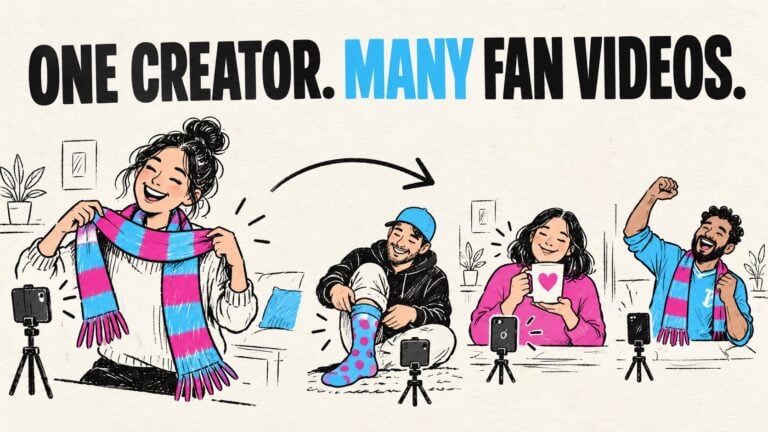
That flexibility changes what one platform can support. An agency might create a three-scene product review for one client, then build a reaction challenge for another. The same system can support testimonials, influencer briefs, event participation, or fan activations.
The infrastructure stays consistent while the creative experience changes.
That is where BrandLens separates itself from most other UGC video platforms. Many platforms manage creators or collect files. BrandLens gives agencies much more control over how the content gets created before it arrives.
Rights can also be captured during submission. Content then moves into a central library where teams can review, moderate, organize, download, and share submissions.
For agencies managing multiple client UGC campaigns, video collection workflows for agencies can remove several manual steps. Creative guidance, rights capture, submission, and review do not need to live across separate tools.
There is an important limitation. BrandLens is not a creator marketplace. If an agency needs software to discover 50 paid creators from a database, a platform such as Insense may be the better starting point.
The value changes when the agency already has access to creators, customers, audiences, or communities. BrandLens helps those people create usable content with less intervention from the agency.
That becomes especially important with consumer activations. A creator marketplace usually begins with a selected creator, while BrandLens can begin with anyone holding a phone.
For agencies trying to scale participation, that is a very different model.
Best fit: Agencies that need repeatable, highly customizable video collection across customers, creators, communities, and large-scale activations.
2. Insense: best for structured influencer marketing campaigns
Insense is closer to a traditional creator marketing platform. Its marketplace gives agencies access to a large creator network while supporting briefs, creator selection, messaging, payments, shipments, and delivered assets.
That makes Insense strong for influencer marketing campaigns where creator sourcing and administration are the main problems. Agencies can manage paid creator relationships inside a more structured workflow.
The trade-off is participation flexibility. Insense is designed around managed creator campaigns rather than opening a branded recording experience to thousands of customers, fans, or event participants.
That is not a weakness when creator discovery is the goal. It is simply a different operating model.
Best fit: Agencies that need creator discovery, paid collaborations, influencer posts, and creator administration.
3. Billo: best for repeatable creator ad production
Billo is built around commissioned creator content. Brands and agencies create briefs, select creators, ship products, review submissions, and request revisions.
That model works particularly well for paid social teams that need a steady flow of creator-led ads. It gives agencies a repeatable production process without managing every creator relationship manually.
Its core unit, however, is still a commissioned creator deliverable. That is very different from asking 5,000 customers to join a product challenge or collecting hundreds of fan reactions at an event.
Billo works well when an agency wants selected creators to produce assets for a defined brief. It is less suited to open participation across a broad consumer audience.
Best fit: Performance and paid-social agencies that need a steady pipeline of commissioned creator ads.
4. JoinBrands: best for accessible creator marketplace campaigns
JoinBrands is another strong option when creator sourcing comes first. Agencies can post campaigns, receive creator applications, send products, and move completed content through an approval workflow.
The platform supports both content-only UGC and social posting campaigns. That gives teams flexibility between asset production and more traditional influencer activity.
For agencies running many micro or nano creator jobs, this model can be efficient. The limitation is similar to Billo and Insense: participation is centered on people inside the creator marketplace.
JoinBrands is not primarily designed to turn a client’s wider customer base into an open video participation channel. Agencies needing both creator sourcing and broad consumer collection may therefore need separate tools.
Best fit: Agencies wanting a marketplace for UGC creators, micro-influencers, product seeding, and social posting campaigns.
5. Vocal Video: best for polished testimonial collection
Vocal Video solves a narrower problem. It is built around remote testimonial collection, allowing customers to answer guided questions and record through a browser.
The platform then helps marketers turn those responses into polished testimonial assets. That makes it useful for customer proof, case studies, ecommerce reviews, and recurring testimonial programs.
Its limitation for agencies is creative breadth. Vocal Video is optimized around asking questions and producing testimonials rather than designing highly customized participation experiences.
That approach works well when testimonials are the goal. It becomes more restrictive when a concept requires several scenes, visual prompts, overlays, or campaign-specific recording flows.
Best fit: Agencies whose main requirement is structured testimonial collection and polished testimonial output.
6. Boast: best for straightforward customer reviews and testimonials
Boast also focuses heavily on testimonials and customer feedback. Agencies can share hosted forms or embed them on a website, allowing customers to record video from a camera-enabled device.
The platform also supports features such as reminders and consent collection. That makes it practical for recurring review programs where simplicity matters more than creative complexity.
Its workflow is closer to a customer feedback form than a customizable video activation. That is adequate for many testimonial programs but more limiting for campaigns requiring multiple scenes or richer creative direction.
Best fit: Agencies needing a simple system for testimonial and customer feedback collection.
How to choose UGC video software for client campaigns
The wrong question is, “Which platform does UGC?” Almost all of them do something that now falls under that label.
The better question is: Where does the agency’s bottleneck begin?
If the bottleneck is finding creators, platforms such as Insense, Billo, or JoinBrands make sense. If the challenge is testimonial collection, Vocal Video or Boast may provide everything the campaign needs.
The decision changes when the problem is getting many different people to create the right video with minimal agency intervention. That workflow needs guidance before recording begins, not just review after the content arrives.
It also needs rights to be handled early. Review cannot become a spreadsheet exercise, and participation cannot depend on unfamiliar software or complicated uploads.
This is where video collection becomes infrastructure.
Agencies should be able to reuse that infrastructure across accounts while changing the creative layer for every client. That protects margins without making the work look templated.
A good system standardizes operations without standardizing ideas.
Why BrandLens stands apart from other UGC video platforms
Most UGC video platforms begin on one side of the equation. Creator marketplaces start with talent, while testimonial tools begin with questions.
BrandLens starts with the experience the participant sees through the camera. That difference becomes important when agencies care about both scale and consistency.
A written brief exists outside the recording moment. The participant has to remember it while filming, which creates room for missed instructions and unusable takes. An on-camera prompt appears when the instruction matters. A scene timeline can show someone what to record first, what comes next, and what should appear on screen.
That structure can reduce the amount of unusable content an agency must review later. It can also give creative teams more freedom because different campaigns do not need to share the same recording format.
The same technology can support:
- Product reviews and demonstrations
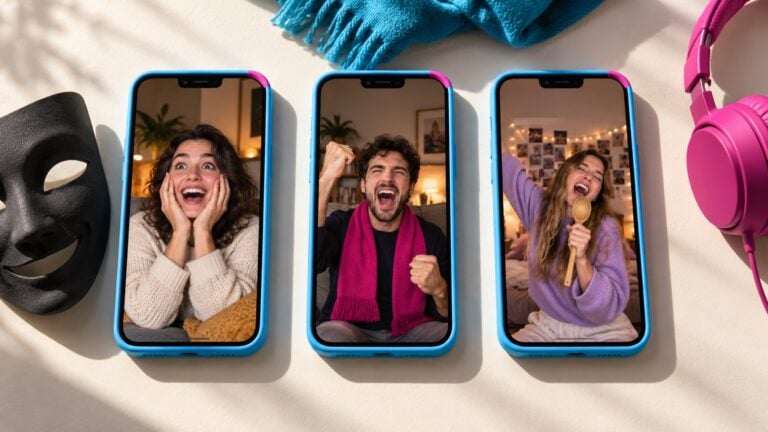
- Unboxings and reactions
- Customer testimonials
- Micro and nano influencer submissions
- Branded challenges
- Fan participation
- Event and QR-based activations
The operational layer can remain consistent while the participant experience changes for each client. That is valuable for agencies because scaling operations should not force every campaign into the same creative template.
This is the strongest reason to consider BrandLens as an agency video tool rather than another UGC marketplace.
It is not just another place to receive files. It gives the agency control over how those files get created.
UGC at scale is a quality problem before it is a volume problem
Many agencies approach UGC at scale as a sourcing problem. They find more creators, send more briefs, and collect more files. That works until review becomes the bottleneck. More submissions are not valuable when the agency spends hours checking whether each person followed the brief.
This is where structured UGC matters. The better approach is to move creative guidance closer to the moment of capture.
Instead of correcting every mistake after submission, the recording experience should prevent avoidable mistakes in the first place. Visual references, prompts, overlays, and scene instructions can all provide guidance without removing the participant’s personality.
The objective is not to make UGC feel scripted. It is to remove unnecessary ambiguity.
For agencies, scale is not measured by how many videos arrive. It is measured by how many usable videos arrive without creating proportionate work.
Why no-app participation matters
Every extra step creates another opportunity for someone to leave. That matters even more when campaigns extend beyond professional creators.
A paid influencer may tolerate downloading an app, creating an account, reading a detailed brief, and learning a new workflow. A customer usually has far less motivation.
The same applies to fans at events or consumers responding to a QR code. They may be excited to participate for a few minutes, but that interest is fragile.
Browser-based, no-app participation reduces that gap. Someone can scan a QR code or open a link and move directly into the experience.
That gives agencies a much larger potential participant pool. It also creates more opportunities to build client UGC campaigns around audiences the brand already has.
Paid creators still have an important role. They simply do not need to be the only source of usable UGC.
What will still matter in 2027
The software in this category will keep changing, but the operating problem will not. Agencies will still need more content without adding proportionate production labor.
Clients will also continue asking for creative control without making participation feel scripted. Those demands make the underlying workflow more important than any single feature release.
AI will create more synthetic brand content as well. That makes actual human participation more valuable, not less.
AI can help organize, edit, classify, or repurpose UGC. It cannot create user-generated content by definition because there is no user behind the generation.
The durable questions for agencies are therefore straightforward:
- Can people participate easily?
- Can the agency shape what happens before recording?
- Are content permissions handled early?
- Can large numbers of submissions be reviewed efficiently?
- Can the workflow support different creative ideas?
- Can the same infrastructure work for another client next week?
Those questions will remain useful long after today’s feature lists change.
Final verdict: the best UGC video software depends on what you need to scale
There is no single winner for every agency workflow. Insense is stronger when creator discovery and influencer administration are central, while Billo is well suited to recurring paid creator production.
JoinBrands offers another marketplace-driven approach. Vocal Video and Boast make more sense when testimonial collection is the primary requirement.
BrandLens has the clearest advantage when an agency needs something broader. It allows agencies to build guided, branded video experiences for existing creators, customers, fans, attendees, and communities.
Participants can join through a link or QR code without installing an app. Creative guidance, rights, review, moderation, and content collection can all sit inside the same workflow.
Most importantly, agencies can change the participation experience itself. They are not limited to sending another brief and hoping every participant interprets it correctly.
That makes BrandLens less like another UGC marketplace and more like infrastructure for scalable video participation.
For agencies trying to scale quality content and consumer participation without scaling manual work at the same rate, that is the more important distinction.