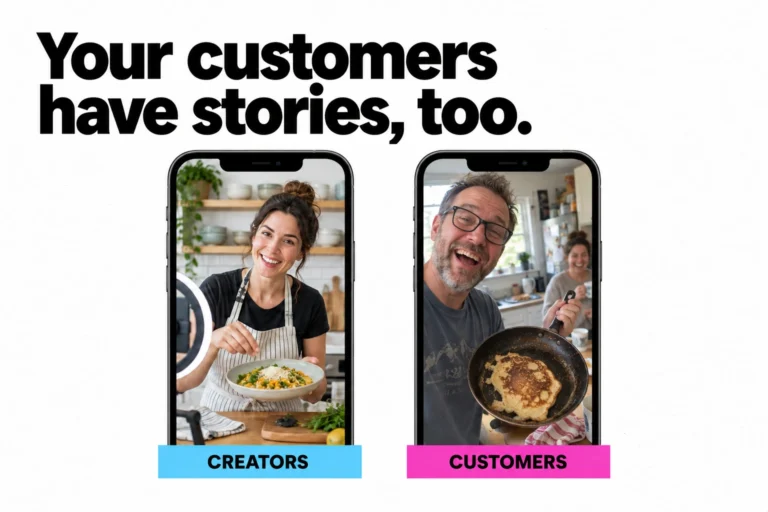
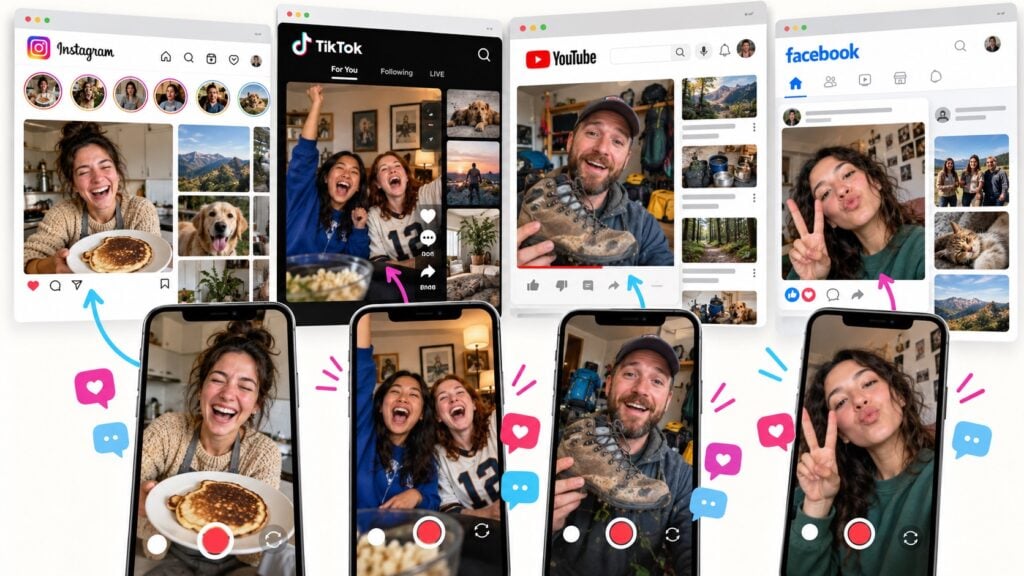
A busy feed can still leave followers feeling like spectators. A useful social media engagement strategy gives them several ways to take part. Some want an answer; others want to help, choose, share, or create. Your job is to make each invitation worth their time.
That starts with a change in how you plan content. Ask what people will gain from joining in before deciding what your brand hopes to collect. They might learn something, solve a problem, make a friend laugh, or see their idea used. Participation should offer value before it asks for effort.
What is a social media engagement strategy?
The direct answer
A social media engagement strategy is a plan for creating and responding to useful audience interactions. It defines who you want to involve, what they can do, and why they would participate. It also sets responsibilities, follow through, and measures of success.
Social media management handles the daily work of posting, replying, and reporting. An engagement strategy connects that work to an outcome, such as better customer understanding or stronger community relationships. Give people ways to benefit even when they don’t post. A useful answer or a saved checklist can still serve your audience.
Build a social media engagement strategy your followers can join
1. Audit what people already care about
Start with a manageable sample, such as your last 20 posts and the messages received alongside them. Record the topic, format, reach, and the actions people took. Read the actual responses, too. A dozen detailed questions about one issue may tell you more than a large pile of unrelated reactions.
- Which questions or frustrations appear repeatedly?
- Which posts prompt useful replies, shares, saves, or customer stories?
- Where do followers already help or talk to one another?
- What happened after people responded: a useful reply, an update, or silence?
A spreadsheet is enough for this exercise. Group what you find into a few themes, such as product help, shared interests, or creative expression. Check when followers are active and whether your team can respond during those periods. Use this evidence to choose one activity to test.
2. Match the activity to a clear goal
Choose what a useful result would look like before picking a format. If you need insight, ask a question people can answer from experience. If you want community connection, create space for people to exchange advice or compare experiences. If you want creative contributions, offer something enjoyable to make.
| Your goal | A way followers can participate | What to track |
|---|---|---|
| Understand a need | Answer a focused question or explain a poll choice | Useful responses and recurring themes |
| Help customers | Ask questions and share practical advice | Questions resolved and helpful replies |
| Strengthen connections | Share a photo, routine, or personal story | Returning participants and conversations |
| Shape future content | Suggest a topic or submit questions for a live session | Ideas used and relevant attendance |
| Invite playful creation | Add commentary, lip sync, or finish a scene | People taking part and completing it |
| Collect useful stories | Share a tip, review, demonstration, or experience | Relevant contributions with permission to use |
Tell people what their input will influence. A vote between two real choices can feel worthwhile when the result leads to a visible decision. Explain the boundaries if followers aren’t making the final call. When people contribute their own photos, stories, or videos, you’re also developing user generated content from your community.
3. Plan the response before publishing the invitation
Decide who will check replies, answer questions, and handle issues that need another team. Set aside a response window your team can sustain. A product question deserves a useful answer; a complaint needs a clear next step. Follow up when you promise to investigate something.
Give people a clear way into the chat. Ask what went wrong with a task and what they tried to fix it. Reply to the detail they share, and let others add their own tips. Agree who will deal with abuse and who can help with private support issues. Keep fair criticism visible while enforcing the rules.
4. Test a small, repeatable weekly routine
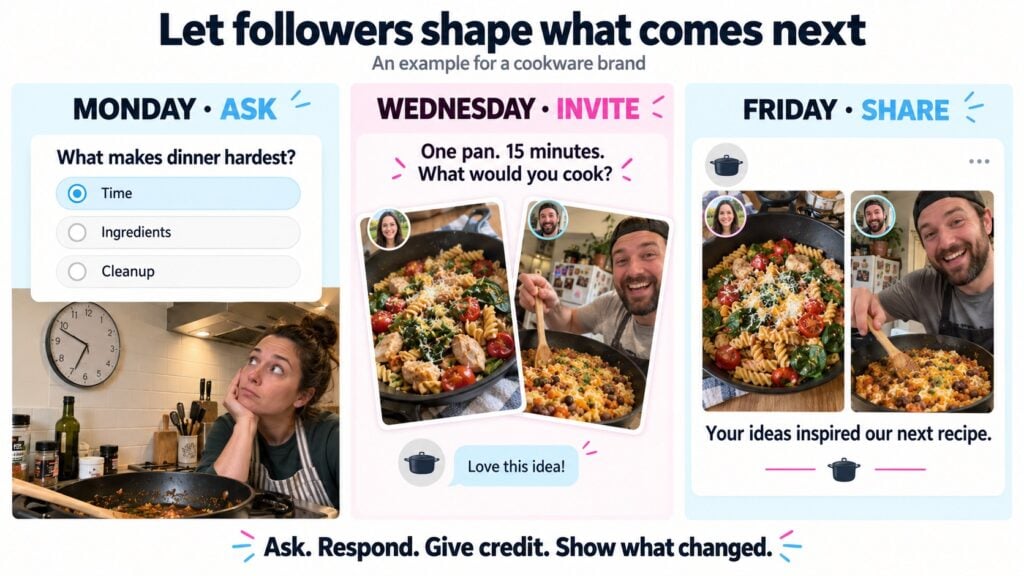
Consider a cookware brand whose followers keep asking for quick weeknight meals. Its goal is to exchange useful ideas and learn which problems deserve future content. The following is an illustrative plan a small team could adapt. It uses existing social features and leaves room for followers to contribute in different ways.
- Monday: Ask whether time, ingredients, or cleanup makes dinner hardest. Invite people to explain their choice.
- Wednesday: Use the leading issue to invite ideas: ‘One pan, 15 minutes. What would you cook?’ Share an achievable example.
- During the week: Answer questions and ask useful follow ups. Invite recipe suggestions, photos, or short clips without requiring every format.
- Friday: Publish a roundup with permission and credit. Explain which ideas will shape the next recipe or demonstration.
Review who took part and which exchanges helped someone. Keep the useful theme while changing an invitation that fell flat. Allow time to respond before increasing the posting pace. Treat this as a starting experiment you can adjust to suit your team.
5. Make creative contributions easy and enjoyable
Test the full journey on a phone when you ask for a photo or video. Show an example, keep the request clear, and remove steps that add little value. Let people choose a contribution that suits their confidence and interests. That might be a quick tip, a winner prediction, or a personal love message.
BrandLens helps brands turn a video request into simple and playful video participation. Followers open a link or QR code without app downloads or registration. They can give a quick answer or join something fun, such as becoming a commentator or finishing a scene. Other experiences could include lip syncing, picking a winner, or sending a love message.
Brands build these experiences with camera templates that combine text prompts, images, videos, and other layers. Each layer can guide participants without being recorded, appear in the final video, or do both. For example, instructions can stay out of the recording while a branded frame appears in the finished clip. The goal is to make creation simpler and more fun, while leaving room for each follower’s personality.
What real brand communities can teach social teams
On its dedicated LEGO Ideas community, fans can submit designs, support others’ ideas, and join activities or polls. Ideas reaching 10,000 supporters enter consideration for becoming a product. LEGO decides which ideas move forward. The lesson for social teams is to offer different ways to join and explain what each action can lead to.
In a 2018 account of its community approach, Monzo described how forum feedback helped shape its Pots feature. It also explained how members supported one another and how feedback informed product improvements. This shows the value of routing useful contributions to the right people inside a business. Your social team can adapt that principle by reporting back when customer input leads to action.
How do you measure meaningful social media engagement?
Use measures that match the goal you chose. For customer help, track questions resolved and whether people receive the promised follow up. For content planning, count usable ideas and show which ones became published work. For community connection, look for people returning and useful conversations between followers.
One useful engagement rate is total engagements divided by reach, multiplied by 100. Define which actions you include, and compare similar formats over the same reporting window. A rate based on followers or impressions uses a different denominator. Keep those calculations separate so your comparisons remain meaningful.
For a hypothetical post, 30 interactions and 1,000 people reached would give a 3% engagement rate. Those actions might come from fewer than 30 people. Track unique participants separately if you can. Use the same calculation to compare your next similar post.
- Count people as well as actions. One person leaving several comments doesn’t represent several distinct participants.
- Track the next useful step. Connect relevant visits, enquiries, or content use to the activity where your tracking allows it.
- Add creation measures when relevant. For submissions, track completed contributions and returning contributors. Define what counts as starting before calculating completion.
Why aren’t your followers engaging?
Look for where interest breaks down before changing the whole plan. Low visibility needs a different response from a confusing request. Plenty of comments can also hide a conversation that isn’t useful to anyone. Use the pattern you see to choose a specific adjustment.
| What you see | What to investigate | What to test |
|---|---|---|
| Few people see the post | Reach, topic, format, and timing | A clearer opening or a time informed by your account’s data |
| People see it but stay quiet | Relevance, effort, and the reason to respond | A concrete question or easier way to join |
| Many replies, little useful insight | An overly broad or polarizing request | A focused question about actual experiences |
| People start but don’t finish | Unclear steps, long forms, or creation friction | A simpler journey tested on a phone |
| People join once and disappear | Weak follow through or little benefit | A visible result and a useful reason to return |
Change one major element at a time so you can learn from the result. Check the quality of replies alongside the totals. A sharp disagreement may need careful handling even when the numbers look strong. Keep the activity aligned with the relationship you want to build.
Frequently asked questions
How can brands increase social media engagement?
Start with a topic followers already care about and offer a clear reason to respond. Choose a format that fits their effort and interests. Reply with useful information and show what their input influenced. Test one activity against a defined goal before expanding it.
What types of content get the most engagement?
Useful questions, how to guides, polls, photos, live chats, and videos can all prompt a response. The right choice depends on your goal and what your followers like to do. Test a few formats on your own account. Look at what people say and do, as well as how often they click.
How often should a brand post on social media?
Start at a pace that leaves time to reply and share the results. Try one activity each week alongside the posts you already make. Review who responds, what they gain, and how much work it takes over several weeks. Add more when your team can keep up with both the posts and the replies.
What is a good social media engagement rate?
Use a benchmark from the same platform and type of post, with the same way of counting engagement. Check your recent results to set a baseline for your own account. Watch how it changes over time. Ask whether those extra actions helped people or moved your goal forward.
How do you turn social media followers into a community?
Give people a regular reason to help, recognize, and learn from each other. Thank them for useful input and show what you do with it. Help new people find a way into the chat. Let shared interests and useful exchanges give them reasons to come back.
How do you encourage followers to create content?
Give people a reason to join, such as fun, a useful tip to share, or a chance to help. Show an example that feels easy to try. Explain where their work may appear and ask for permission to use it. Let them keep it off their own social feed when the activity allows that.
Give people a part that matters
Choose one goal, one activity, and one person responsible for following through. Give followers a clear reason to join and show what their effort produces. Then use what you learn to improve the next invitation. A simple activity handled well can be a sensible place to start.
Teams developing a regular stream of customer stories can build this into an ongoing customer content program. The same discipline applies to conversations, feedback, and peer support: make people’s involvement useful. Your followers should have a reason to care about the outcome. What could they contribute that would make your community better?