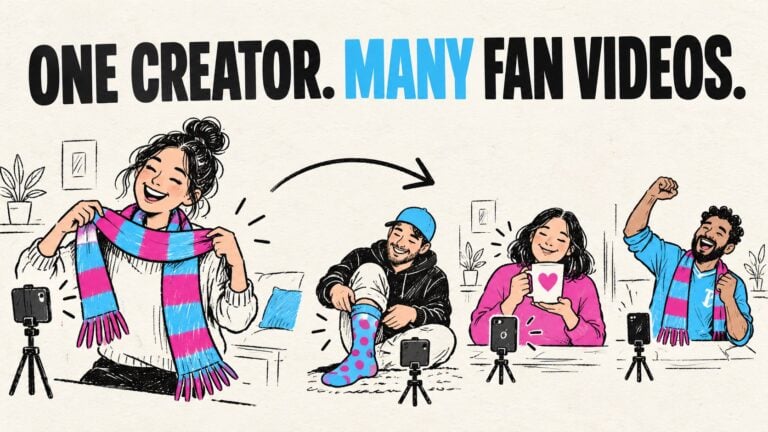
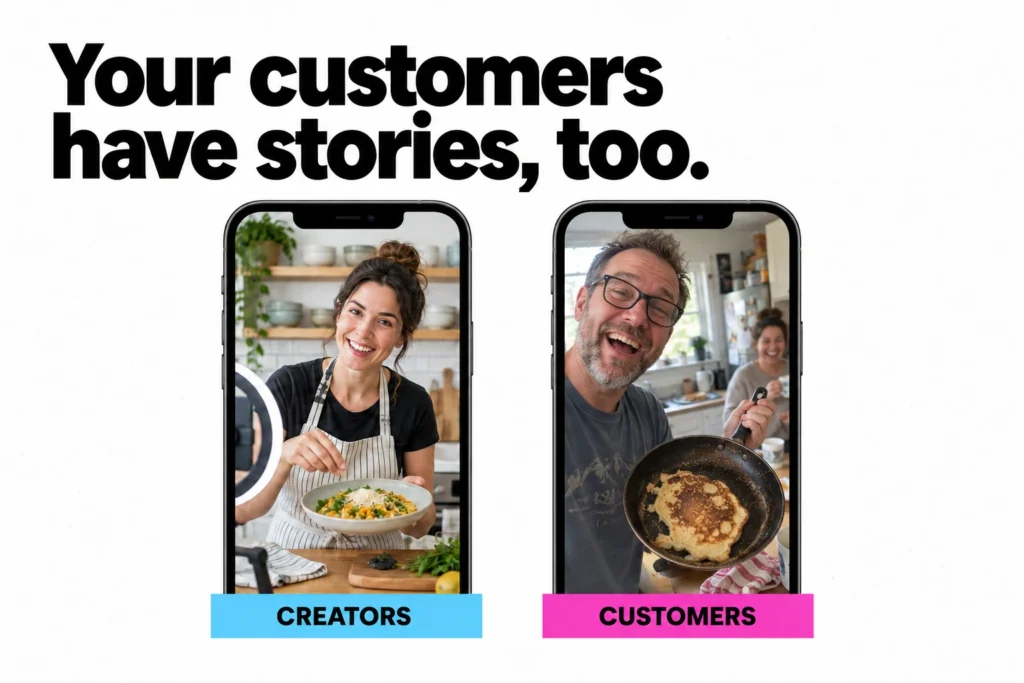
Creator marketing can become a permanent budget line while customers remain an afterthought in the content plan. That’s the risk behind this week’s enthusiasm for bigger programs, broader partnerships, and more professional management. The industry is getting serious about working with creators, with clearer expectations for those relationships. It should put equal care into inviting customers to contribute something worth hearing.
The distinction matters when planning where each voice belongs in your marketing. A creator introduces your brand to new audiences. A customer can explain what happened after buying, once the launch excitement faded and real life took over. Both perspectives deserve a place in the plan.
My view is simple: brands that invest in creators should also make room for stories from their own customers. More paid voices do not make your customers feel heard. The opportunity is to make customer experience a regular source of useful stories. That takes more thought than adding another face to the content calendar.
Creator marketing is becoming a permanent commitment
The clearest signal arrived on October 21. A study released by LTK and Northwestern University found an ongoing creator program component at 91% of surveyed brands. The research surveyed 209 senior marketers in June, all at brands already investing in creator marketing. Most worked at organizations with revenue above $100 million. That sample tells us about brands that already spend on creators.
Other coverage reinforced that direction. On October 19, Marketing Dive covered Billion Dollar Boy Group’s acquisition of Creator Authority, a specialist in business audiences. The deal had been announced on October 14. It shows agencies building capabilities around a broader role for creators, beyond consumer product launches.
Meanwhile, Little Black Book covered Zeno’s Collab by ZDX offering on October 20, following its October 13 announcement. The offering combines creator relationships, strategy, reputation, and performance. These developments show organizations planning creator work continuously, with expectations that extend beyond the next sponsored post.
That’s a useful shift for brands developing evergreen UGC programs, raising a practical question about who gets invited. Can everyday customers share stories often, even when they have no audience to sell? Their value starts with what they know from using the product.
Reach and experience deserve different briefs
A skilled creator brings specific skills. They understand pacing, presentation, audience expectations, and the small choices that make a story worth watching. Paying for that work makes sense. Expecting that package from an ordinary customer makes participation harder than it needs to be.
Imagine a cookware brand planning its next quarter. A skilled creator might make a beautiful meal that introduces the pan to thousands of potential buyers. A customer might show how it cleans after six months of hurried family dinners. That second clip answers a different question. The burnt cheese has a job to do.
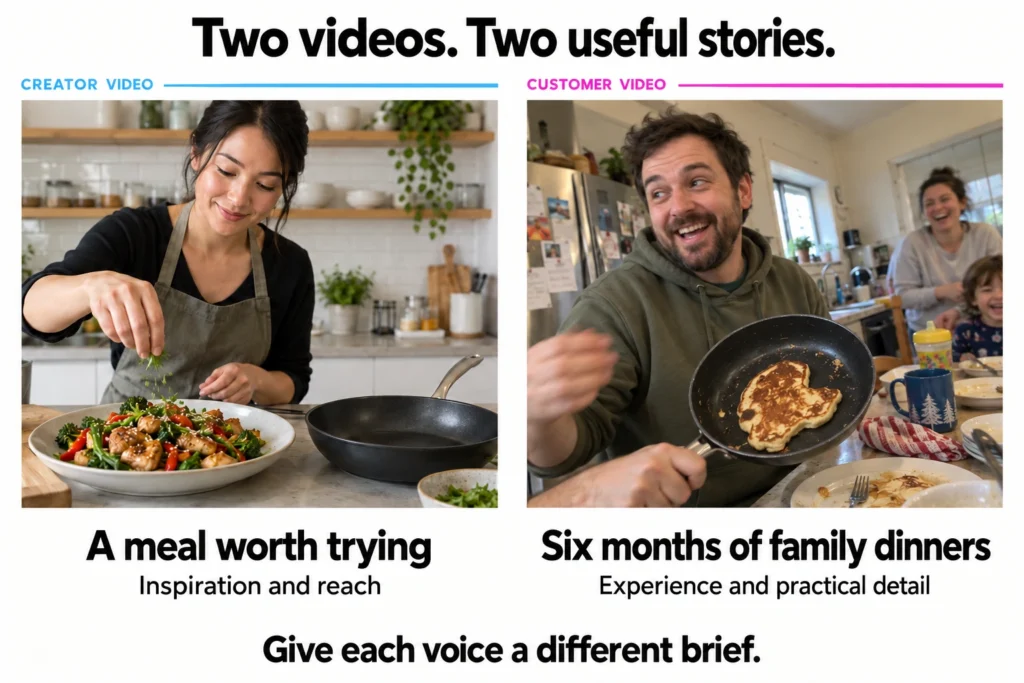
Neither perspective guarantees a sale, but each provides different help. That difference should shape your brief and your questions. Asking customers to imitate paid creators can erase the details that made their experience useful. A polished take is optional; a clear, honest answer matters more.
| Voice | Best contribution | A useful prompt | What to evaluate |
|---|---|---|---|
| Professional creator | Reach, storytelling, and cultural context | Show where this product fits your audience’s routine. | Audience fit and the intended business result |
| Experienced customer | Details from regular product use | What changed after a month of using it? | Specificity and usefulness to another buyer |
| New customer | Questions and first impressions | What surprised you when you first tried it? | Clarity about the early experience |
| Returning customer | Reasons for choosing the product again | What made you come back? | Insight into repeat purchase decisions |
These roles can overlap. A creator may also be a loyal customer, with valuable experience beyond the paid assignment. Define the story you need before selecting the person. Follower counts cannot answer that question for you.
The missing invitation is a marketing decision
Picture a customer with a useful story. They have solved a small problem with your product and could explain it in thirty seconds. Your team would welcome that story. Yet nobody has asked a clear question or explained why sharing it would help another person.
Content planning tends to begin with what the brand needs to publish this month. Customer experience can easily get overlooked. Try starting with what customers are already learning, adapting, or explaining to their friends. Their answers can reveal stories your campaign brief would never have requested.
The request still needs to earn attention. A vague request to “share your experience” leaves customers to invent the entire task themselves. A clear question gives them a place to start while leaving them free to choose what they say. Keep the effort proportionate to the value they receive.
Useful prompts might ask customers to:
- Show one small adjustment that made the product more useful.
- Explain what they wish they had known before buying.
- Answer a question they remember having themselves.
- Share why they chose the same product again.
Ask at the right time. A note after delivery can ask about first impressions, while a later message can ask how things have held up. This is where ongoing customer video programs fit naturally into a brand’s existing customer relationships. BrandLens offers one way to invite those contributions through a link or QR code. First, decide to make room for buyers to share their stories all year.
Give customers a reason beyond helping your calendar
“We need more content” is a weak invitation. People have their own plans and good reasons to protect a quiet moment from one more brand request. Show them why their story matters. A chance to help someone avoid a mistake gives the request a clear purpose that a full folder cannot.
Giving credit can also make the request feel worthwhile. A brand can share buyer tips, name the people behind them, and show how their advice helped someone else. That closes the loop. If you keep asking without thanking people or using their work, even a warm reminder can feel like a chore.
Compensation deserves a place in the conversation. A quick voluntary answer and a commissioned video with several revisions are very different requests. If you need skilled creative work, pay for it. Customer participation should never become a clever label for demanding unpaid creative labor.
Creator marketing needs a customer participation scorecard
Counting clips is easy, but deciding whether they help anyone requires more thought. Different teams may want different outcomes. Start with how you plan to use the answers. A buyer’s question, a reason for repeat sales, and a social post each call for their own measure of success.
A useful scorecard should connect participation to an actual decision. It should also reveal when your requests create work without producing value. The measures below give you a place to start. Choose definitions your team can apply consistently before collecting the first response.
| Measure | Simple definition | What it helps you decide |
|---|---|---|
| Invitation response rate | Unique contributors divided by customers who received the invitation | Whether the question, timing, and effort are working |
| Useful contribution rate | Responses meeting your stated purpose divided by all responses | Whether the prompt produces relevant detail |
| Cost per used asset | Total program cost divided by distinct assets actually used | Whether collection creates value beyond a full folder |
| Effect on a buyer action | Compare the chosen action between randomized test and control groups | Whether showing the content changes behavior |
Define “useful” before you review the clips. A clip might need to answer a common question, show real use, and have permission for its planned placement. Praise alone should not qualify. A glowing clip that says little may help less than a mixed review that shows what happened in real life.
Be careful with sales claims. People who choose to watch a customer video may already have stronger buying intent than those who skip it. That difference can make simple comparisons misleading. Where traffic allows, randomly show the content to one group and compare outcomes against a control group. Small samples should produce cautious decisions.
Leave room for something you did not want to hear
The uncomfortable part is also valuable. Customers may explain that your packaging confuses them, your instructions miss a step, or a feature needs improvement. Those responses belong in the learning process. You learn less when each awkward comment gets cut from the first review and no one acts on it.
You still need editorial judgment. Remove private information, examine unsupported claims, and keep published stories relevant to the audience and their context. Leave room for someone to speak in their own voice, with the small quirks that make it theirs. Ask a clear question, then let people surprise you. Their answer should still belong to them.
That is the customer blind spot I would address before expanding another creator roster. Keep investing in skilled creators where their contribution serves the strategy. Then make space for customers whose value comes from experience, regardless of their audience size. A sensible next step is considering how an ongoing customer video program would work alongside those relationships.
The next planning meeting needs one more question. Which customer experiences deserve to be heard, and what have we done to invite them? Name who owns that task and set a time to review what you learn. A brand can spend all year talking about community and still give its customers little chance to shape it.