Museums are full of stories. The problem is that too many of them stop at the exit. A visitor may spend an hour with an exhibition, feel something real, tell a friend later, post a photo, or remember one object for years. But most museums capture only the attendance number, not the meaning the visitor made. That is a missed opportunity for museum visitor engagement.
The next step for museums is not louder promotion. It is better participation. When visitors are invited to become storytellers, the museum gains something more useful than passive attention. It gains interpretation, emotion, memory, and language from the people the experience was built to reach.
Why Museum Visitor Engagement Needs More Than Attendance
Attendance tells a museum that someone came. It does not tell the museum what moved them, what confused them, what they shared, or what stayed with them.
That distinction matters right now. According to the American Alliance of Museums’ 2025 National Snapshot, 55% of U.S. museums were seeing fewer visitors than in 2019, and 29% reported decreased attendance in 2025 because of weaker travel, tourism, and economic uncertainty.
When every visit has to work harder, museums cannot afford engagement that disappears when someone walks out the door.
Museum professionals already have the right language for this shift. The field talks about audience engagement, visitor experience, community engagement, interpretation, co-creation, co-curation, co-production, and participatory practice. The Museums Association frames engagement around visitors, audiences, and communities feeling welcome, represented, and creatively involved in museum work. It also describes participation, co-production, co-creation, and co-curation as important parts of deeper engagement.
That is the heart of the opportunity.
Museums do not need visitors to replace curators. They need visitors to reveal what the museum experience means once it meets real life.
Museum Visitor Engagement Improves When Visitors Have a Role
A visitor who looks is an audience member. A visitor who responds becomes part of the experience.
That response can be simple. A reflection. A memory. A question. A short video. A story about who they came with. A moment where an artwork, artifact, or exhibition theme connects to their own life.
This is where museum storytelling becomes more than interpretation. It becomes participation.
The Participatory Museum describes co-creative work as a way for cultural institutions to become more responsive to the needs and interests of their audiences. It also notes that visitors arrive with their own needs and interests, and museums can design programs that invite people to use the space for their own reasons.
That idea is useful for marketing teams, but it is bigger than marketing.
Visitor storytelling can help museums:
- Understand which themes actually resonate.
- Create more authentic social content.
- Build stronger community representation.
- Support audience development.
- Extend the exhibition beyond the gallery.
- Give programming teams qualitative insight.
- Show donors and partners human impact.
A visitor story is not just content. It is evidence of connection.
Visitor Storytelling Works Best When It Is Guided
Museums should not rely on random social posting as their only form of visitor participation.
Random posting has value, but it is uneven. Some visitors tag the museum. Many do not. Some share thoughtful reflections. Others share only a selfie. Some posts are usable. Others lack permission, context, or clarity.
Guided storytelling is different.
It gives visitors a clear invitation, a specific prompt, and an easy way to respond. That structure matters because most visitors are not walking through a museum thinking, “I should create useful content for the marketing team.” They are with family, friends, students, or tourists. They are moving through a physical space. Their attention is limited.
The easier the invitation, the better the participation. Strong prompts ask for meaning, not praise.
Instead of:
“Tell us what you loved.”
Ask:
“What did this object remind you of?”
“What would you tell a friend to notice here?”
“Which part of this exhibition surprised you?”
“What personal memory connects to this story?”
“What should future visitors understand before they enter this room?”
These prompts turn visitors from reviewers into interpreters. That is the difference between a testimonial and a story.
The Practical Workflow: From Exhibit Moment to Visitor Story
For museum teams, the biggest barrier is not usually imagination. It is operations.
Visitor experience teams do not want clunky technology in the gallery. Exhibition teams do not want interpretation diluted. Marketing teams need usable content. Education teams need participation to remain thoughtful. Leadership needs consent and brand safety handled responsibly.
A useful workflow has to respect all of that.
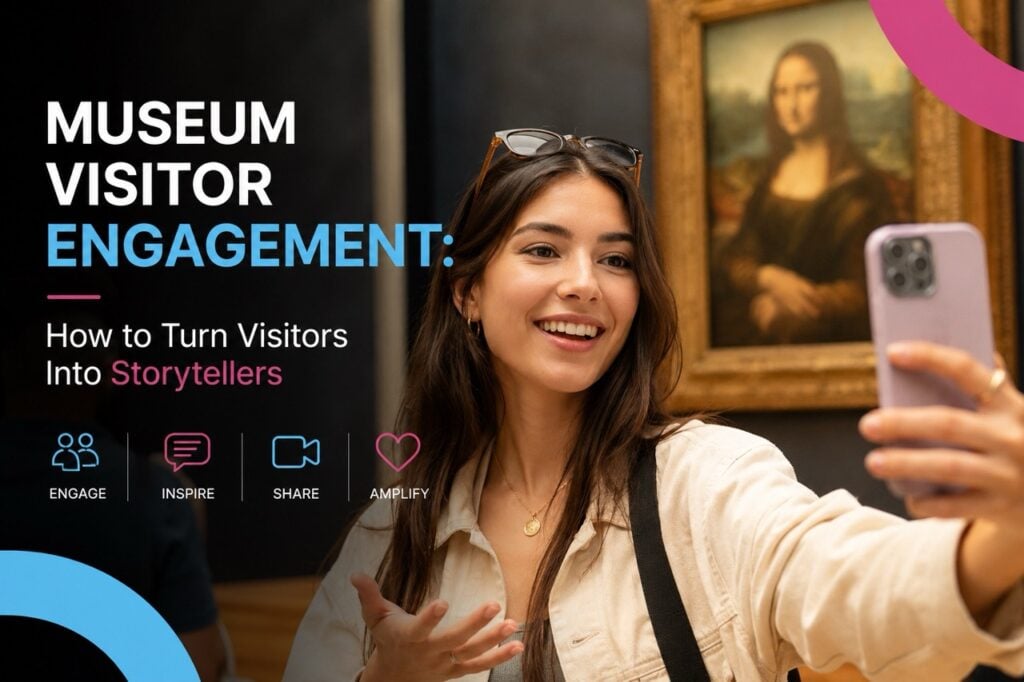
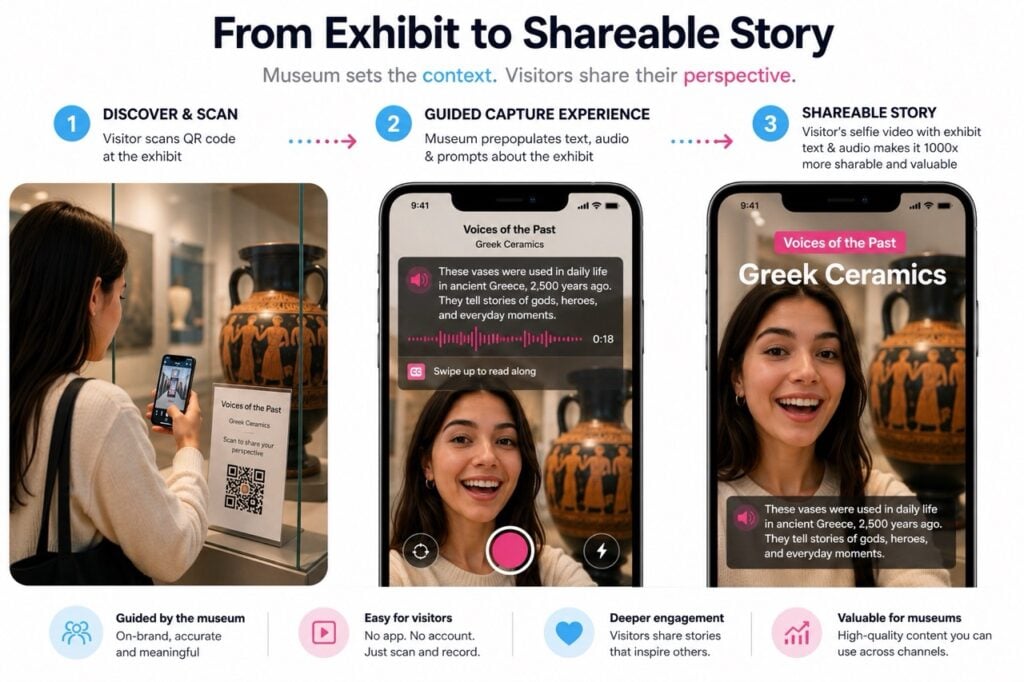
One practical model is a QR-based exhibit storytelling flow. BrandLens’ museum workflow, for example, describes a process where the museum places a QR code near an artwork or exhibit, the visitor scans it, the browser camera opens without an app or account, and the museum preloads the experience with text, audio, branding, and exhibit context. The visitor records a short 20–40 second video, and the museum receives rights-cleared content for future use.
That workflow matters because it solves several museum-specific problems at once.
It keeps participation close to the exhibit moment.
It gives the museum interpretive guardrails.
It removes app-download friction.
It keeps the response short.
It makes consent part of the submission flow.
It creates a library of visitor-generated content the museum can review.
The best version of this does not feel like a marketing capture station. It feels like an invitation to respond.
That distinction is important. Museums should not turn galleries into content factories. The goal is to help visitors articulate a connection while the experience is still fresh.
Where Visitor-Generated Content Helps Museum Marketers
Museum marketers already know social media matters. The harder question is what to post when the calendar is full of events, exhibitions, membership pushes, and institutional announcements.
Visitor-generated content can help, but only when it has context.
AAM has argued that user-generated content can influence someone’s decision to visit a museum and help people feel like they belong. It also describes UGC as an underused source of content for museums trying to reach their communities.
The strongest visitor-generated content does not simply say, “I visited.” It shows why the visit mattered.
A short visitor story can become:
- A social post that feels human.
- A newsletter feature tied to an exhibition.
- A donor update showing community impact.
- A lobby screen celebrating visitor voices.
- A school or family program recap.
- A tourism campaign asset.
- A membership renewal reminder.
This also gives museum marketers a better alternative to generic promotional copy.
“Plan your visit” has a place. But a visitor saying, “I brought my daughter here because this story reminded me of my grandmother,” carries a different kind of weight.
It feels less like advertising. It feels like belonging.
How Exhibition and Programming Teams Can Use Visitor Stories
Visitor storytelling is not only a marketing asset. It can be a learning loop.
Exhibition teams can look at visitor stories to see which objects attract emotional response. Programming teams can identify themes that deserve follow-up events. Education teams can see which prompts create reflection. Visitor experience teams can spot confusion, friction, or delight.
This is especially useful because traditional feedback often arrives too late or feels too formal. Comment cards, surveys, and post-visit emails have value. But they rarely capture the immediate emotional moment.
A guided story can.
It gives teams qualitative insight in the visitor’s own words. Not every submission needs to be published. Some should simply be learned from.
That may be the most overlooked benefit.
Visitor storytelling helps museums understand the gap between intended interpretation and lived experience.
Designing Prompts That Respect the Museum Experience
Museums should be careful with visitor storytelling. Not every exhibit needs it. Not every space is appropriate. Some topics require quiet, privacy, or deep sensitivity.
Good prompt design starts with judgment.
Use storytelling prompts where visitors are likely to have a personal, reflective, joyful, or curious response. Avoid turning grief, trauma, sacred objects, or contested histories into casual content moments.
A simple prompt framework helps:
For art museums: “What detail changed how you saw this piece?”
For history museums: “What part of this story connects to today?”
For science centers: “What did this make you want to understand better?”
For children’s museums: “What did your child explain to you in their own words?”
For community exhibitions: “What memory or perspective would you add to this story?”
The museum should set the tone. Visitors should bring the meaning.
The Best Museum Stories Travel With the Visitor
The museum visit does not end when someone exits the building.
A visitor may share a story with a friend, send a video to family, post a memory, recommend the exhibition, or return for a program because the experience felt personal. That is the real value of participatory museum experiences.
Digital storytelling research in cultural and heritage tourism points to the importance of social media integration, multimedia engagement, community participation, and cultural authenticity in reaching younger audiences and supporting visitor engagement.
That does not mean museums should chase every platform trend.
It means museums should design visitor participation with the same care they bring to interpretation. The story must remain accurate. The experience must remain respectful. The visitor’s contribution must feel voluntary, contextual, and valued.
A museum’s voice still matters. But the visitor’s voice helps the story travel.
That is the shift.
Museum visitor engagement is not only about getting people through the door. It is about helping them leave with a story worth sharing.
The collection gives the museum authority.
The visitor gives it reach, memory, and life.