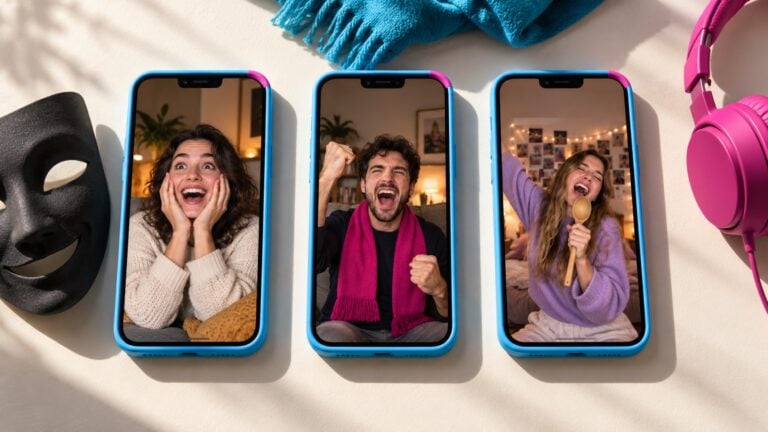
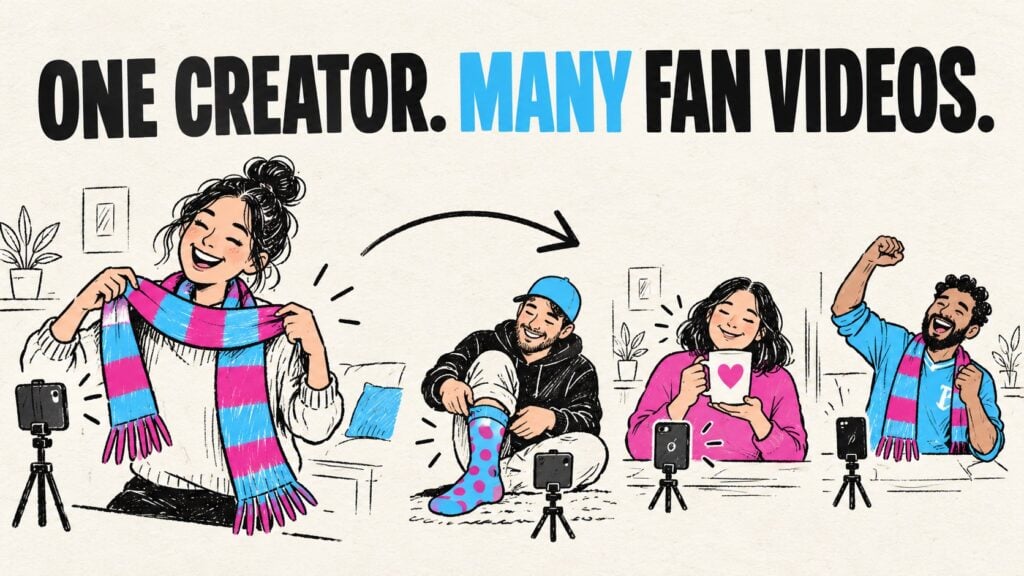
An influencer activation can deliver a popular post and still leave the wider audience watching from the sidelines. The creator performs, the comments arrive, and the report looks good. Yet the fans never make anything themselves. If your goal is widespread participation, that gap deserves its own brief. Creators can do more than launch a campaign. They can demonstrate the idea, make joining feel achievable, and invite people into a shared moment. Fans then add their own performances and perspectives. Build the campaign around that handoff, and measure how many people actually take it.
What Is Influencer Activation?
Influencer activation means working with creators to prompt a specific audience action around a campaign. The goal might be to buy, attend, sign up, or make a video. For a fan video campaign, the action is recording and sharing a personal response. The creator supplies an example and an invitation that viewers can follow.
A movie fan might finish a scene after seeing a creator perform it. A basketball supporter might reveal the lucky socks that apparently control the entire season. A concert fan might record a chorus before inviting friends to join. Each idea gives fans a way to make their own mark.
Give Influencer Activation a Participation Goal
Start with what you want fans to do after they watch the creator. A brief that asks for buzz leaves the next step open. A brief that asks fans to record their own video gives the creator a clear job. Decide whether success means submissions, public posts, ticket interest, or a combination.
Keep your counts just as clear from the start. A video submitted to the brand may never appear on social media. One fan might post several videos on different accounts. Track people, submitted videos, and public posts separately so the campaign report reflects what happened.
The creative and incentive decisions still matter, but they deserve focused preparation. Choose a video challenge template fans can recreate before commissioning launch posts. Pair it with an incentive that matches the audience. With those pieces in place, the creator brief can focus on helping people join.
What Large Fan Campaigns Actually Show
McDonald’s Italy combined creator promotion with paid placements for its CrispyChallenge. People could perform the shared dance routine or invent their own version. TikTok reports 193,000 video entries from over 75,000 creators across eight days. Those counts show different things: video entries and the people who made them.
Lancôme’s Idôle Power campaign connected a branded filter with the chance to win Olivia Rodrigo concert tickets. Creators helped spread the word, while chosen videos played on a public screen in Mexico City. TikTok reports 9,796 videos using the filter. The campaign connected creator promotion, fan expression, an appealing reward, and public recognition.
These historical reports demonstrate what coordinated campaigns can achieve. They do not tell us how much of the result came from creators, ads, or the fanbase. A filter video is not proof of a valid prize entry, either. My takeaway is to plan the parts together, then track what each brings to the campaign.
Choose Creators Who Can Make Joining Feel Possible
The most recognizable person is not automatically the best demonstrator for your challenge. Look for creators whose fans already care about the film, team, artist, or product. Check whether their past calls to join led to videos you can see. Comments expressing admiration tell you something different from videos recreating a suggested action.
Consider using a lead creator alongside voices from specific fan communities. The lead creator can launch the shared idea. Others can bring local jokes, language, or game day habits to the mix. Give each a distinct role while keeping the participation instructions consistent.
Use these questions when reviewing candidates:
- Audience fit: Does this community care about the campaign moment and qualify to participate?
- Demonstration: Can this creator make the task look enjoyable and achievable?
- Participation history: Can they show examples of followers responding with their own content?
- Audience overlap: Will the creator mix reach different groups within the fanbase?
- Follow through: Will they return to answer questions and highlight participant responses?
Write a Creator Brief That Recruits Participants
A beautiful launch video can leave viewers wondering where they fit. Ask creators to try the same challenge fans will get. They should show the finished result, explain the next step, and make the invitation explicit. The example should make an ordinary fan think, “I could do that.”
Brief the full sequence of creator activity before agreeing on deliverables. A launch post shows the challenge, while later posts can answer questions or share the first fan videos. These moments give fans fresh reasons to come back. Pay for that work explicitly, and define when each deliverable should appear.
Include these items in the brief:
- Demonstration: Perform the challenge using the experience available to fans.
- Invitation: Tell viewers what to record and where to begin.
- Motivation: Explain the reward, recognition, or shared experience accurately.
- Entry details: State the deadline and point clearly to eligibility and rules.
- Follow up: Plan a response showcase or reminder that features approved submissions.
- Measurement: Supply an identifiable campaign link and agree on the reporting window.
- Disclosure: Specify how paid relationships and relevant incentives must be made clear.
Leave room for the creator’s own voice within that structure. A film commentator and a comedy creator should not sound like the same announcer. Both still need to explain the same task correctly. That balance gives the campaign consistency while preserving the reason people follow each creator.
Coordinate Creators, Community Channels, and Paid Media
Your existing audience should have a clear route into the same experience. A creator’s post can launch the idea while an email reaches people who already buy from you. Venue screens, packs, and partner posts can share it in other places. Each placement should make sense for the moment when someone encounters it.
Match the call to join with the place where people see it. A QR code can work on a venue screen where people have their phones ready. A mobile email needs an easy link to tap. Fans watching a social post need a clear route to the challenge too.
Paid promotion can extend effective demonstrations or approved participant videos. Before expanding spend, check whether the traffic produces completed participation. A post can attract clicks while the next screen loses people. Keep some budget to fix that step and support later waves of the campaign.
Launch in Waves Around the Cultural Moment
A good launch needs more than one burst of creator posts. Start by testing each step with people like the fans you want to reach. Watch where they pause, get lost, or give up. Fix those problems before sending the main wave of fans into the challenge.
For a concert campaign, the sequence below offers a practical starting point. It is a proposed plan, not a reported BrandLens client campaign. Use the artist’s launch dates and entry deadline to set the timing. Make sure you have the rights to use the music and clips in each planned channel.
- Test the experience. Ask a small fan group to record, submit, and complete any required social posting.
- Release creator examples. Creators demonstrate their own takes and invite fans to make theirs.
- Open community distribution. Artist channels, ticketing emails, venues, and partners share the campaign invitation.
- Showcase fan responses. Highlight approved videos and give participating creators a reason to respond.
- Expand effective promotion. Increase distribution where completed participation supports the investment.
- Close and celebrate. Explain the outcome, recognize participants, and fulfill the promised rewards.
Imagine a concert challenge built around the moment fans hear their favorite chorus. Creators could introduce their reactions, then invite fans to record their own versions. A later showcase could bring those different reactions together before the concert. The creative idea stays consistent while each wave gives the audience a fresh reason to participate.
Choose which fan videos to show in line with your stated rules. A fan’s video can be featured without that fan winning a prize. Explain that distinction when it applies. Fans should know what being featured means without having to guess.
Make Recording, Submission, and Posting Easy to Follow
The handoff from inspiration to recording is where the campaign becomes real for the participant. Someone who liked the creator’s video now needs to know what to do. Too many choices can turn that burst of fun into a task for later. Give them a clear starting point and guidance while they record.
BrandLens lets teams share a guided video experience through a link or QR code. Teams build prompts, overlays, and scenes that guide fans through recording. Participants submit through their browser, and videos arrive in the organization’s content library. The BrandLens campaign workflow also supports consent collection and permitted sharing or downloading.
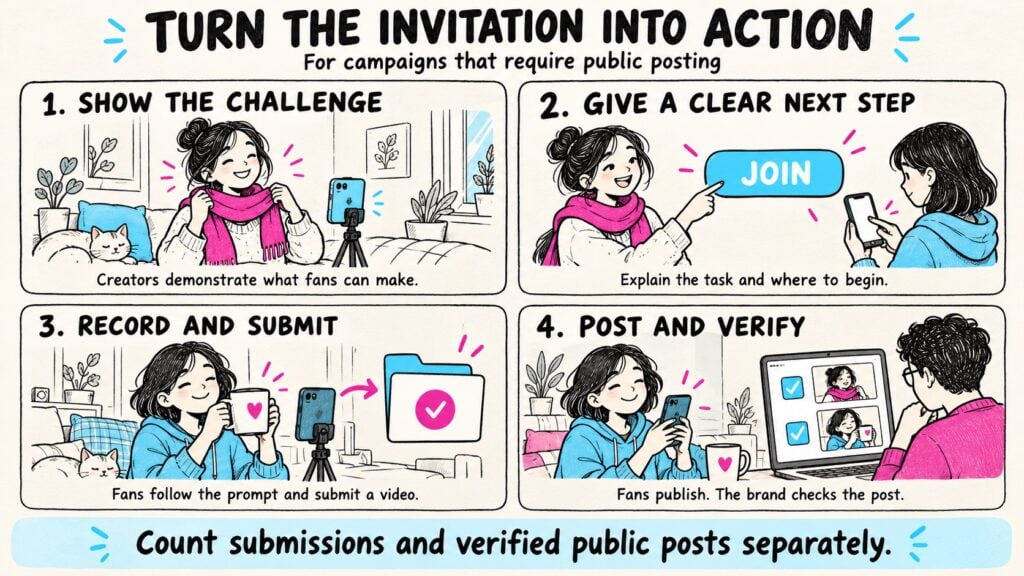
Public posting remains a separate action in that journey. If the campaign requires it, explain where people should publish and what information they must include. Set up a process to collect and check post links or other evidence. Test the transition on the devices and social platforms your audience actually uses.
Build disclosure into the instructions instead of leaving participants to guess. For US campaigns, the FTC explains that contest incentives can require clear disclosure. Paid creators also need clear disclosures of their relationships. Where a video contains an endorsement, FTC guidance calls for disclosure within the video.
Measure Who Joined and What Happened Next
Track the steps people take after they see a creator’s post. Begin with identifiable campaign links, then connect visits with recording and valid submissions where your setup allows. Agree on source labels and reporting windows before launch. If you cannot trace an entry, mark its source as unknown.
A useful campaign dashboard includes:
- Unique participants: Distinct people with valid completed entries.
- Submission completion: Completed submissions divided by recording starts, using a consistent counting method.
- Verified publishers: Distinct participants whose required public post has been checked.
- Publishing rate: Verified publishers divided by valid submitters who were required to publish.
- Cost per valid participant: The defined campaign costs divided by unique valid participants.
- Public content performance: Observed views, engagement, and referral visits from published videos.
- Business outcomes: Relevant ticket visits, registrations, redemptions, or sales measured through the agreed setup.
Imagine a creator sends 1,000 people to the campaign, and 120 submit valid entries. Of those fans, 72 also make a public post that you verify. That gives you a 12% visit to participation rate and a 60% participant publishing rate. These are invented numbers to show the calculation, not expected campaign results.
Source tracking still has limits that should shape your conclusions. Someone might see two creator posts before joining through the brand’s email. That link tells you where the visit came from, but not every reason the fan chose to join. Use participant surveys or controlled comparisons when the decision requires stronger evidence.
Large participation totals also do not establish that a campaign spread organically. Look for people who joined after seeing another fan’s video. Ask how they found the challenge and track referral links where practical. That helps show where fans brought in more fans, beyond the reach you paid for.
Give Fans a Role Worth Taking
Write the call to join before you book the launch video. Decide what fans will make, why they will care, and how they will join. Then ask creators to show how it works and return when fans respond. They can keep playing a role as new voices join.
For marketers and creative directors, the goal is to make fans part of the event’s story. A clear call to join gives fans somewhere to direct their excitement. A smooth process helps turn that feeling into a video they want to share. What would your community enjoy showing the world?
Frequently Asked Questions
How do influencers encourage fans to create videos?
Influencers can demonstrate a challenge, explain why it matters, and give viewers a clear route to participate. Their example should be something ordinary fans can do. Later posts can answer questions and feature fan videos approved for use. Measure the resulting participation alongside the creator’s views and engagement.
How many influencers does a fan activation need?
There is no fixed number that works for every campaign. The right mix depends on audience coverage, budget, timing, and community fit. Start with a mix that lets you test how different groups respond. Expand the mix using valid participation results and a clear view of audience overlap.
Can influencer activation generate thousands of fan videos?
Yes, some past campaigns have reached that scale. The McDonald’s and Lancôme examples above show substantial video creation with coordinated promotion. Those results came from a mix of creators, video ideas, fandom, and paid support. Run a small test to help set your own goals before you scale.
Should fans submit their videos or post them publicly?
Choose what to ask for based on the campaign goal. A submitted video gives the brand a file to review, with the rights it has collected. A public post can put that fan’s video in front of more people. If you ask for both, explain each step and check the public post.
What should brands measure beyond influencer reach?
Measure valid participants, completed submissions, verified public posts, and the cost of generating that activity. Track views, clicks, and visits from those videos where you can. Connect these measures with the campaign’s business objective, such as ticket interest or registrations. Be clear about what you can and cannot prove caused those results.