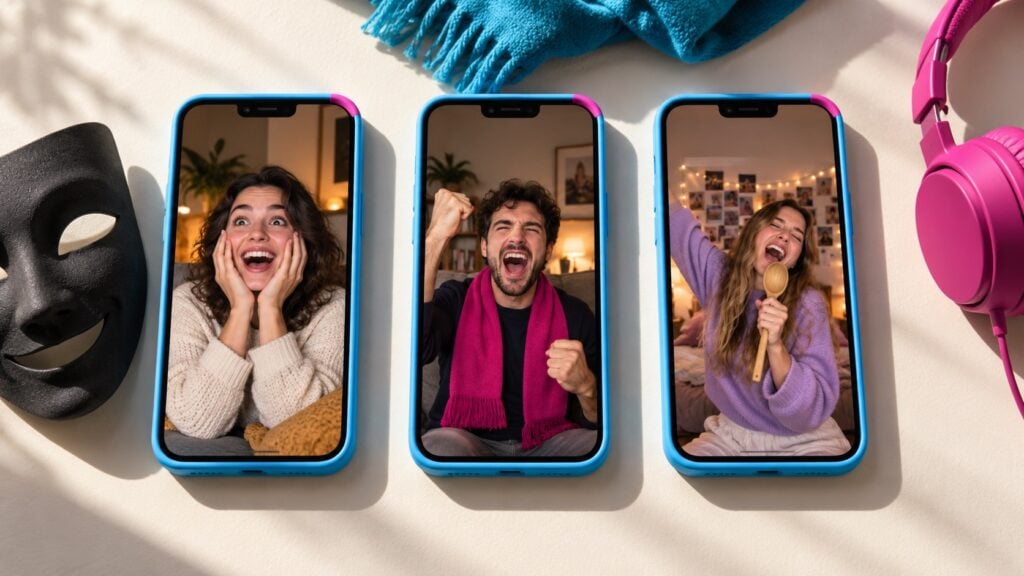
Branded video challenges have two audiences. One person needs a reason to make the video. Everyone else needs a reason to watch it. That creates a real creative test. A campaign can explain the rules, offer a great prize, and still leave fans unsure what to film. The missing piece is often a clear role they can make their own. Build around one simple action, a personal twist, and a result the fan wants to show. That is the job of the template.
What Are Branded Video Challenges?
Branded video challenges invite people to create their own take on a shared creative idea. Fans might complete a scene, reveal a ritual, lip sync a chorus, or react to a launch. A common format connects the videos, while each person adds something different.
Fan video templates give that idea a shape. They can set the opening, timing, visual cues, and ending. During recording, the experience helps people know what to do next.
The prize and creative idea solve different parts of the campaign. Our guide to choosing incentives for UGC contests covers the reward decision. Here, the focus is the video fans will create and share.
Design Branded Video Challenges Around One Clear Action
Start by finishing this sentence: fans will show us their ______.
The answer should suggest an action someone can picture. A lucky jersey, a dramatic reaction, or an unusual food combination gives people a starting point. A broad request to celebrate the brand leaves more work for the fan.
For its 2021 DUNE release campaign, Warner Bros. France invited fans to recreate a character’s gesture. They could also share stories about facing difficult choices. TikTok reported thousands of challenge videos within a week.
The useful creative lesson is the recognizable starting point with room for personal meaning. That is an interpretation of the format. The campaign report does not isolate which creative choice drove the result.
Write the action before designing the visual treatment. If the idea needs several paragraphs of explanation, simplify the task before adding more instructions.
Give Fans Something Only They Can Add
A shared format should leave space for a fan’s face, taste, humor, or story. Decide which parts stay fixed and which parts belong to the person filming.
For a game day ritual, the team frame and opening cue can stay the same. The scarf, lucky snack, family chant, or dramatic reveal comes from the fan. Those details give friends something to recognize and discuss.
Pringles built its PlayWithPringles challenge around creative uses of its can. TikTok describes outfit changes and fans passing the can through duets. The object linked the videos without dictating every performance.
That campaign also used creators and paid promotion. Its results cannot be credited to template design alone. The transferable idea is a familiar object with many possible uses.
When reviewing video challenge ideas, ask what changes from one person’s video to the next. If the answer is only their name, give them more room to contribute.
Make the Finished Video Worth Watching
Design the result before writing the entry instructions. Sketch an example of what someone scrolling will see, hear, and understand.
The opening should establish the idea quickly. The middle needs a moment that belongs to the fan. The ending should deliver a reveal, reaction, joke, or other clear payoff.
For McDonald’s Italy’s CrispyChallenge, people could follow a dance routine or invent their own. TikTok reports 193,000 video entries from over 75,000 creators. Creator promotion and paid placements supported the campaign.
The creative balance matters: people had a common reference and freedom to interpret it. These historical results show what happened in that campaign. They are not a forecast for another brand.
Keep the brand visible through relevant cues: the song, scene, team colors, product, or shared prompt. Give the fan’s performance enough space to carry the video.
Three Fan Video Templates to Prototype
The following are proposed concepts for testing, not completed client campaigns. The suggested timings are creative starting points, not performance benchmarks.
Movie release: finish the scene
Give fans a role inside the film’s world. An approved setup leads into a response they perform in their own style.
- Opening, two seconds: A cleared clip or title card sets up a question.
- Fan take, seven seconds: The fan delivers a dramatic, funny, or unexpected reply.
- Finish, three seconds: A film frame completes their moment in the scene.
The template handles the setup and timing. The performance belongs to the fan. A premiere incentive can fit this concept, with prize mechanics handled separately.
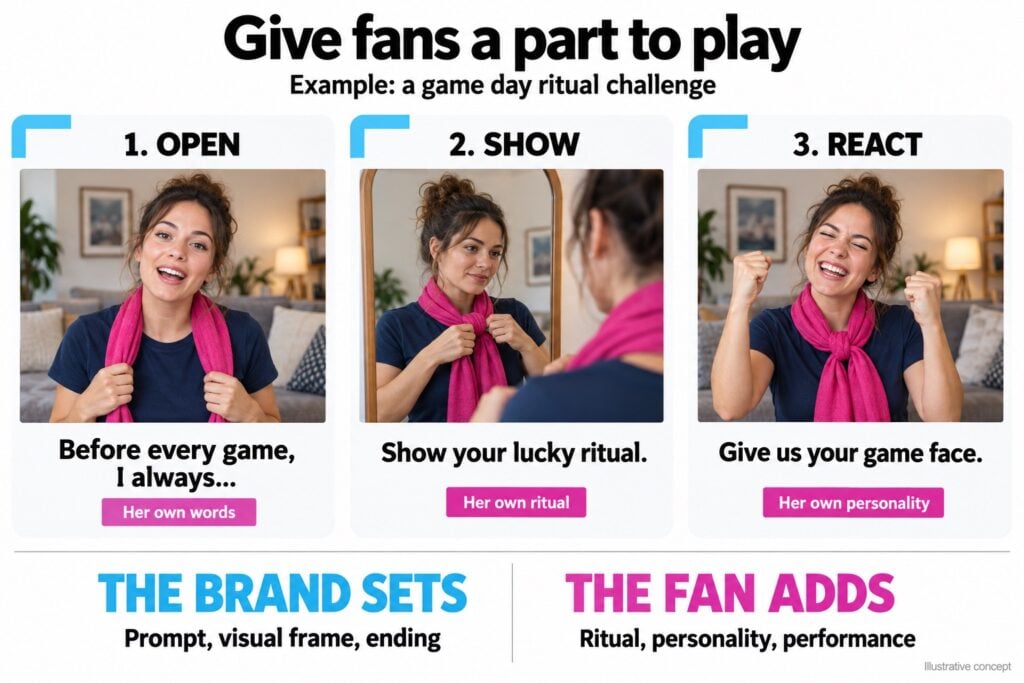
Sports: reveal your game day ritual
Make room for a habit other fans will understand. Start with the prompt: what has to happen before your team plays?
- Opening: The team frame introduces the ritual.
- Fan take: They reveal their lucky object, snack, chant, or routine.
- Finish: A shared cue lets them add their own celebration.
An ordinary fan should be able to join from home. Avoid a concept that depends on stadium access when the campaign targets the whole fanbase.
Concert: own the chorus
Choose a short, cleared section with an obvious emotional or performance moment. Fans can lip sync it, act it out, or add a reaction.
- Opening: A visible countdown helps the fan prepare.
- Fan take: They perform the chosen line in their own style.
- Finish: The frame leaves room for a reaction or signature pose.
Test playback, recording, and timing on the phones your audience uses. Keep spoken instructions outside any moment that needs clean audio.
These concepts illustrate guided video experiences for entertainment campaigns. They turn a broad request into a specific role someone can perform.
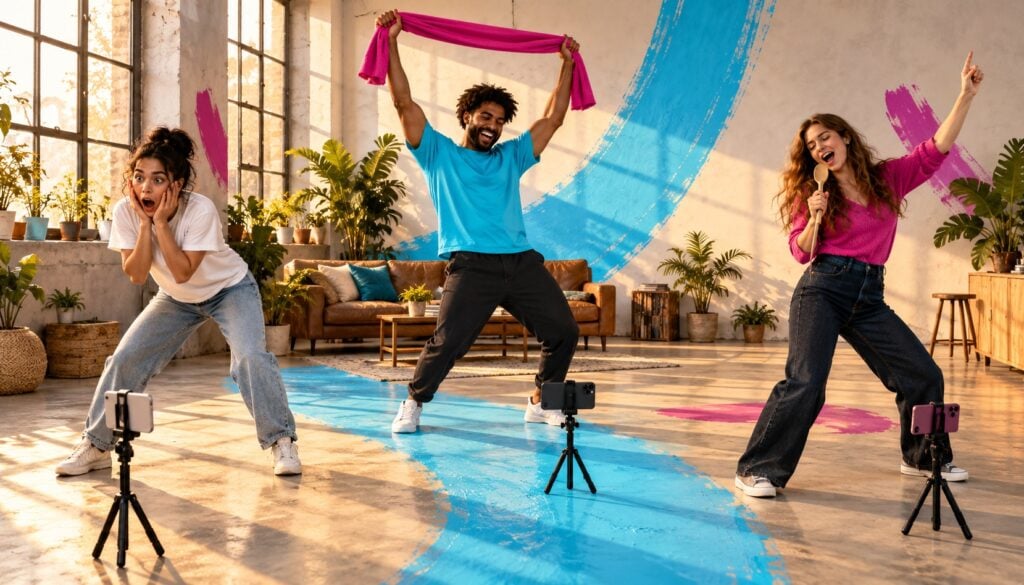
Choose Creative Guardrails That Help the Fan
Define what the campaign needs before filling the frame with requirements. A clear guardrail should help people create a usable video while keeping their own style.
Set a few essentials:
- The action or response each video needs.
- The approved assets and required disclosures.
- The parts fans can change.
- The framing and approximate length.
- The permitted uses of the finished video.
Clear the music, film clips, and other assets for the recording and distribution channels you plan to use. TikTok’s commercial music guidance describes music cleared for content on TikTok. Confirm rights separately for browser recording and any other destinations.
If the video includes an incentivized endorsement, make the relationship clear. The FTC addresses contest incentives and disclosures. Build the relevant requirements into the creative experience before launch.
Test the Template With Fans Before Launch
The creative team already knows the concept. A fan encountering it for the first time gives you a different test.
Ask people from the intended audience to try the template on their own phones. Watch where they pause, ask for help, or start again. Review the finished videos as carefully as the recording flow.
Use five questions:
- Can they explain the idea after seeing one example?
- Can they perform it without coaching from the creative team?
- Does their personality show in the result?
- Would they post it if the prize were not guaranteed?
- Can a new viewer understand it without reading the campaign rules?
Change the element causing confusion, then test again. A shorter prompt might help. So might a stronger setup, a clearer cue, or more freedom in the performance.
Influencers can demonstrate the format and invite their audiences to join. Include an example ordinary fans can recreate with the time and resources they have.
Measure Whether the Creative Travels
Look at each stage of the experience. Recording starts show initial interest. Completed videos show whether people finished the task. Verified public posts show whether they followed through on sharing.
Review viewer response too. Where data is available, compare watch time, completion, shares, and comments across creative versions. Check whether people mention the performance or only ask about the prize.
Use those signals to find the issue. Many starts with few completions can point to a difficult task. Plenty of submissions with little posting calls for a closer look at the result and sharing steps.
These are diagnostic clues, not proof of a single cause. Ask fans what happened before changing the creative.
How BrandLens Supports the Creative Experience
BrandLens lets teams build camera experiences with prompts, visual overlays, audio, video assets, and a shot timeline. Fans open a link or QR code and record in their browser. They can follow the shared format without assembling each visual layer themselves.
The landing page can explain the campaign and capture the relevant information and content permissions. Submitted videos enter one library. Sharing and downloading can be enabled for the campaign.
This makes customizable guided camera experiences useful when a creative idea depends on repeatable timing or framing. Test the exact experience and social posting steps for the devices and channels you plan to use.
The template’s job is to give fans a stage they can use. Build a recognizable setup, leave room for their own take, and make the result worth showing.
Frequently Asked Questions
What makes a branded video challenge worth sharing?
A clear idea, personal expression, and a satisfying result give people something to show. The video should also make sense to viewers unfamiliar with the campaign rules. A prize supports the invitation to join.
How long should a fan challenge video be?
For a first prototype, try a format that fits within ten to twenty seconds. Treat that as a starting point. Test whether fans can complete the action and viewers can understand the result.
How can a template guide fans without making every video identical?
Fix the setup, timing cues, and essential brand assets. Let fans choose their performance, story, objects, or response. The format should be recognizable while each video adds a personal detail.
Does every fan need video editing skills?
A guided recording experience can supply prompts and visual layers during creation. Design the task so fans can complete it with their phone. Test the flow with people who have no editing experience.
Can BrandLens support acting, lip sync, and reaction challenges?
BrandLens supports guided templates with visual assets, audio, prompts, and camera timing. These can support acting, lip sync, and reaction concepts. Confirm the specific playback, recording, and sharing setup through a campaign prototype.