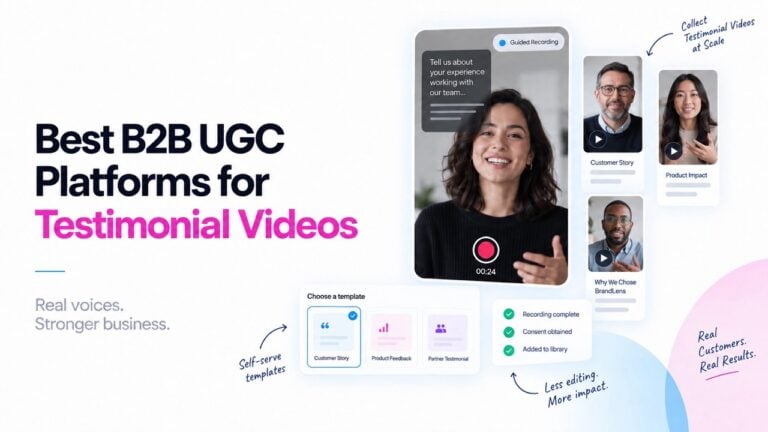
VideoAsk vs Vocal Video looks like a simple software comparison, but marketers are often comparing them for several different jobs. Some need interactive video conversations. Others want customer testimonials. Many need something broader: a repeatable way to help customers, employees, creators, or communities make useful video content at scale.
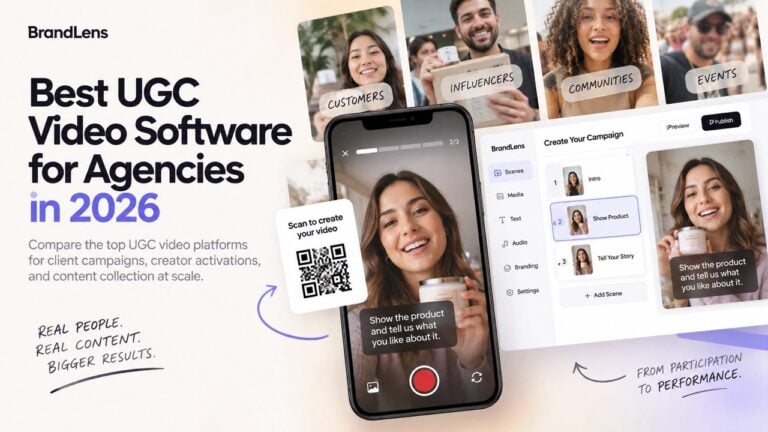
That third need changes the comparison (this is where BrandLens comes in). VideoAsk, Vocal Video, and BrandLens can all collect video, but they are built around different outcomes. BrandLens belongs in the discussion because it moves beyond video testimonials and simple responses. Its focus is helping marketers create reusable video experiences with templates, teleprompting, on-camera instructions, visual elements, rights capture, and centralized video collection.
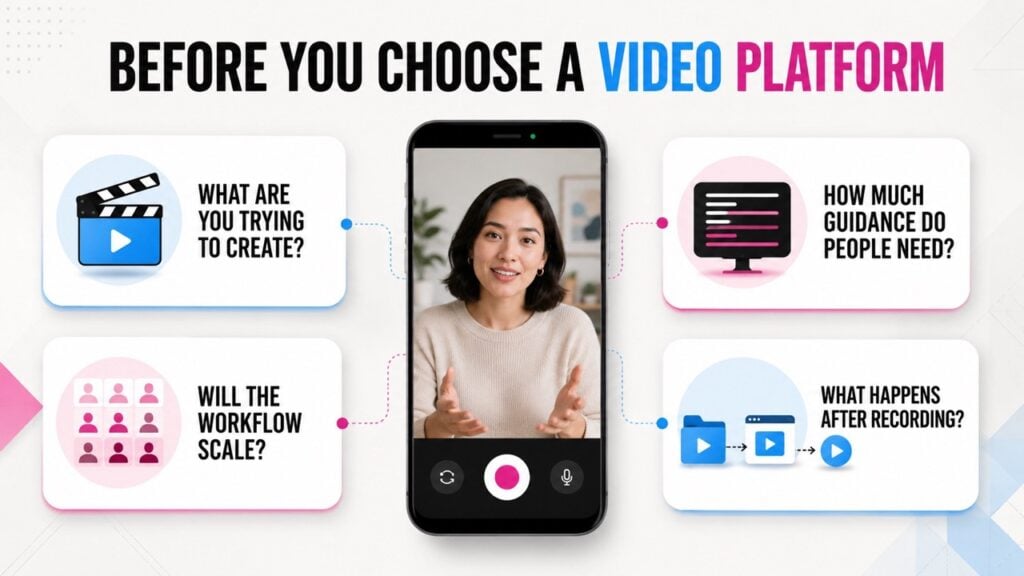
The right choice therefore depends less on whether a platform can record video. The more useful question is what kind of video program you are trying to build.
| Comparison | BrandLens | VideoAsk | Vocal Video |
|---|---|---|---|
| Primary model | Simple video collection and submission experiences | Interactive video conversations and forms | Video collection, testimonial production, and publishing |
| Best suited for | Testimonials, UGC, product content, customer videos, employee content, creator submissions, and other video formats | Lead flows, interviews, research, feedback, and asynchronous conversations | Testimonials, customer stories, employee videos, and polished published assets |
| Template approach | Customizable video templates with text, images, audio, video elements, instructions, and editable camera timelines | Interactive question-and-response flows | Prebuilt collector templates with questions and recording support |
| Recording support | Teleprompting, on-camera instructions, visual elements, and structured multi-part recording experiences | Pre-recorded questions with video, audio, text, and other response types | Questions, recording tips, teleprompter scripts, and response controls |
| Participant access | Web-based links, QR codes and embeds | Web-based links and embeds | Links, email requests, and QR codes |
| Rights workflow | Usage rights captured as part of the submission experience | Not a central part of its public positioning | Standard permissions with custom release options on qualifying plans |
| After collection | Centralized video library, organization, moderation, review, publishing, embedding, and galleries | Conversation management, response data, integrations, and follow-up | Editing, branding, captions, hosting, galleries, and publishing |
VideoAsk vs Vocal Video vs BrandLens: Start With the Job
Feature tables are useful, but they can also hide the most important difference. Products that all accept video can still solve very different problems. A marketer should start by defining the desired output, then work backward into the collection experience.
VideoAsk starts from communication. Its product is designed around personalized asynchronous conversations, video forms, funnels, interviews, and other interactive flows. Its open-ended questions can accept video, audio, or text, while other steps support choices, scheduling, NPS, file uploads, and related actions. That makes VideoAsk’s interactive video platform useful when the response is part of a wider conversation or conversion journey.
Vocal Video starts much closer to content production. A marketer creates a Collector, asks people to record responses, and then works with those recordings inside a publishing workflow. Its current product supports more than 45 templates, teleprompter scripts, custom recording tips, releases, QR codes, editing, captions, and hosting. The Vocal Video collection and production workflow is especially relevant when the desired output is a polished testimonial or story.
BrandLens starts with the video marketers want participants to create. Its templates can combine camera recording with text, images, audio, video elements, instructions, and teleprompting. That gives marketers more control over the creative structure before submissions arrive, while still allowing the person on camera to provide the human part.
Why BrandLens fits better compared to VideoAsk vs Vocal Video
The strongest reason to consider BrandLens is not that it can also collect a testimonial. Many platforms can do that. The difference becomes clearer when marketers need several kinds of video from the same underlying collection infrastructure.
A customer testimonial might ask someone to explain a result. A product campaign could ask customers to demonstrate how they use something. A creator program might require several shots, a specific introduction, an on-screen message, or a short product moment. An employee program may need consistent introductions from hundreds of people.
Those requests are all video submissions, but they are not all testimonials. BrandLens uses reusable video templates to shape each experience before the participant begins recording. Marketers can include teleprompting when exact language matters, visual references when something needs to appear on screen, and several recording steps when one continuous answer is not enough.
This is useful for marketers learning how to collect videos from customers for more than testimonials. The creative request and the collection workflow become part of the same system rather than separate instructions scattered across email, PDFs, and upload links.
That is also why BrandLens should not be positioned as another testimonial tool in this comparison. Testimonials are one use case. The broader opportunity is repeatable content creation and collection across customers, creators, employees, communities, and other participants.
When VideoAsk Is the Better Fit
VideoAsk makes the most sense when interaction itself is the objective. A sales team might want a visitor to answer a question, choose an option, provide contact information, and schedule a meeting. A recruiting team might use asynchronous video answers alongside other candidate information. A research team may want video for some questions and structured responses for others.
That flexibility is one of VideoAsk’s real strengths. Its conditional logic can route people through different paths, while its answer types extend far beyond recorded video. The platform is therefore closer to an interactive communication and form system than a dedicated marketing content engine.
This distinction matters because not every video response needs to become a reusable marketing asset. Sometimes the marketer simply wants richer information or a more human conversation. In those situations, adding more content-production infrastructure would solve a problem the team does not actually have.
When Vocal Video Is the Better Fit
Vocal Video is a stronger fit when the program revolves around collecting responses and turning them into polished videos. That is why customer testimonials are such a natural use case for the platform. The collection process and the production process are connected.
Respondents can receive questions, recording tips, and teleprompter scripts. Marketers can also use custom release language on qualifying plans and distribute Collectors through links, emails, or QR codes. After collection, Vocal Video can apply branding, subtitles, editing, hosting, galleries, and publishing tools.
That combination reduces the work required to turn raw customer responses into finished proof. A company building a testimonial library may value that more than extensive control over how each person creates the original footage. The job is clear, and Vocal Video is built closely around it.
It would be misleading to describe Vocal Video as a bare testimonial recorder. The platform has expanded its collection and editing capabilities significantly. Its April 2026 editor update added transcript-based editing, filler-word removal, and silence shortening, which makes its post-recording workflow even more central to the product.
Where BrandLens Is Different: Content Creation Before Collection
BrandLens approaches the workflow from the other direction. Instead of relying mainly on post-production to shape what was recorded, marketers can put more creative structure into the recording experience itself. That matters when consistency, format, or specific visual elements affect whether a submission is useful.
A BrandLens template can tell someone what to do while the camera is open. It can show teleprompter text, images, instructions, audio, or other video elements. Marketers can also build a sequence of camera shots rather than asking for one open-ended answer. BrandLens documents these capabilities in its customizable video template and collection features.
This creates a different kind of control. The goal is not to script every participant or make every submission identical. It is to reduce the gap between the marketer’s creative brief and what the participant actually records.
That can be valuable for testimonials, but it becomes more important outside testimonials. Product demonstrations, customer reactions, unboxings, creator briefs, employee stories, educational videos, and community content can all require different structures. A reusable template gives the marketing team a way to design those structures once and distribute them widely.
VideoAsk vs Vocal Video vs. BrandLens for Collecting Content at Scale
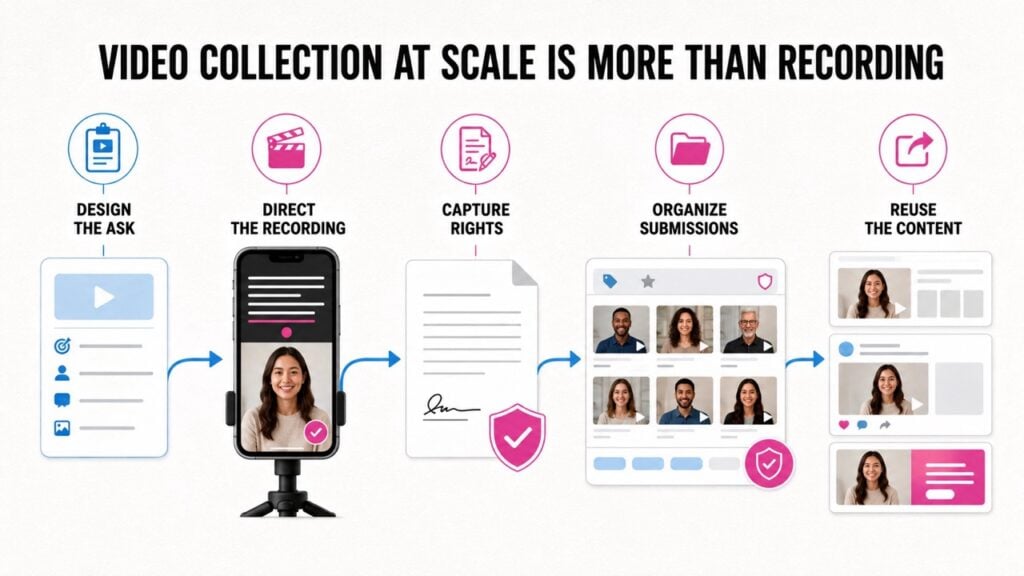
The phrase “at scale” needs more scrutiny in this category. A platform can technically accept hundreds of recordings while still creating substantial work for the marketing team. Collection volume is only useful when the resulting videos remain understandable, usable, and manageable.
Consider what happens when submissions grow from ten to one thousand. Someone needs to know why each video was created, which campaign it belongs to, whether permission was captured, and what happens next. The content also needs to be reviewed and found again later. This, and the ability to handle many simultaneous submissions, is where VideoAsk and Vocal Video don’t do well.
This is where the difference between a recording tool and a video submission platform becomes more important. BrandLens places submitted videos into a centralized content library with organization and moderation features. Rights can also be secured during submission instead of becoming a follow-up task.
Marketers dealing with larger programs should therefore examine the entire intake workflow, not only the recording screen. BrandLens has explored this problem in its analysis of video submission workflows that eliminate upload and folder chaos. When volume rises, the surrounding process often creates more work than the camera itself.
What Marketers Should Compare Beyond Video Testimonial Software
The most useful buying criteria depend on what the organization plans to do with the video. For a testimonial program, editing and publishing may deserve more weight. For an interactive funnel, branching and mixed response types may matter more. For a repeatable content program, the structure of the participant experience becomes central.
Marketers should also consider how much work happens outside the platform. Sending separate creative briefs, chasing permissions, downloading files, renaming them, and moving clips into folders all create hidden operating costs. Those costs rarely appear in a software comparison, but they become obvious once participation grows.
A traditional upload process can look inexpensive because the technology itself is simple. The organization pays for that simplicity with manual coordination. The broader problem is explained in more detail in BrandLens’ article on why video uploads and folder workflows break at scale.
The participant experience also deserves more attention. People may be willing to record a video without being willing to download an app, create an account, read a long creative brief, or transfer a large file. Every extra step competes with participation.
So Which Video Collection Platform Should You Choose?
The VideoAsk vs Vocal Video decision becomes easier once the job is defined. VideoAsk is a strong fit when video supports a conversation, form, funnel, interview, or interactive response flow. Vocal Video is a strong fit when collecting responses and turning them into polished testimonials or published stories is the main objective.
BrandLens makes more sense when marketers need a broader video creation and submission system. Its value increases when testimonials are only one part of the content plan and the organization also wants product videos, creator content, employee stories, customer demonstrations, community contributions, or other repeatable formats.
The distinction is not simply about having more features. It is about where each product puts its attention. VideoAsk emphasizes the interaction. Vocal Video emphasizes collection and production. BrandLens emphasizes helping many participants create the intended video and then managing those submissions as an ongoing content resource.
For marketers building that kind of operation, video collection infrastructure built around reusable templates, teleprompting, rights capture, and centralized submissions is worth evaluating as its own category. The best platform is not the one that can technically receive a video. It is the one whose workflow matches what the marketing team needs people to create.