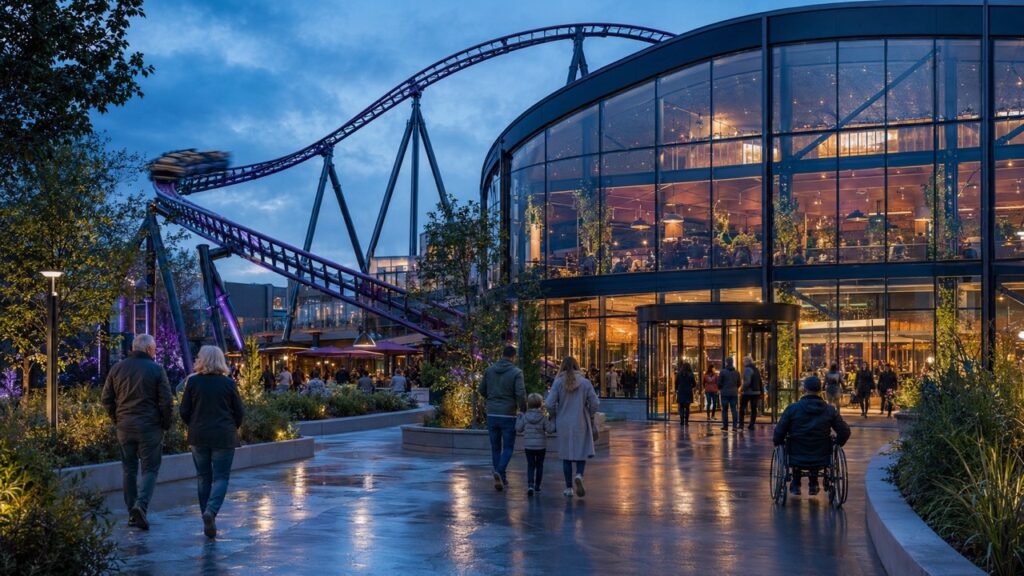
IAAPA Expo Europe 2026 arrives while the attractions industry is rethinking where growth will come from. New rides still matter, but attendance alone is no longer a dependable strategy in mature markets.
Operators are dealing with cautious consumer spending, unpredictable weather, capital pressure, accessibility requirements, and changing discovery habits. At the same time, demand for memorable in-person experiences remains strong.
The most important attractions industry trends now concern how venues use existing capacity, create reasons to return, and improve the economics of every visit. IAAPA Expo Europe offers a useful view of where those changes are heading in 2027.
Why IAAPA Expo Europe 2026 Matters Beyond the Show Floor
IAAPA Expo Europe 2026 takes place in London from September 21–25. Its program covers amusement and theme parks, water parks, family entertainment centres, museums, heritage sites, zoos, aquariums, and other location-based entertainment businesses.
The agenda is unusually revealing this year. Dedicated discussions cover competitive socialising, guest flow, repeat visitation, sustainability, accessibility, intellectual property, safety, AI, data, and indoor entertainment.
That mix suggests the industry is moving beyond a simple search for the next major attraction. Operators are looking for more flexible ways to increase value without relying on constant large-scale construction.
1. Growth Is Moving From Attendance to Yield and Repeat Visitation
The global attractions market has largely moved beyond its post-pandemic recovery phase. The 2024 TEA Global Experience Index reported that attendance at the world’s top 25 theme parks rose 2.4% to almost 246 million.
However, the report described mature markets in western Europe, Japan, and the United States as broadly flat or showing modest changes. That puts more pressure on revenue per visitor, repeat visits, memberships, food and beverage, premium experiences, and better use of existing capacity.
IAAPA’s own industry updates have also pointed to consumer resistance around pricing and softer in-park spending in several regions. Operators cannot assume that higher ticket prices will compensate for slower attendance growth.
The stronger opportunity is to improve the full commercial model. Attendees should watch for approaches that reduce congestion, increase off-peak use, improve conversion, or create more reasons to return.
2. Competitive Socialising Is Becoming a Major Attractions Vertical
Indoor entertainment is moving from a secondary attractions category into a serious growth market. IAAPA Expo Europe 2026 includes a dedicated Indoor Entertainment Day and a session on the competitive socialising boom in location-based entertainment.
Concepts built around golf, football, darts, bowling, racing, puzzles, and other group activities combine gameplay with hospitality. They are designed for social visits, corporate groups, dates, and repeat occasions rather than a single annual family trip.
The model is attractive because it can operate year-round and fit into urban retail or leisure developments. It also reduces some of the weather exposure facing outdoor attractions.
Yet novelty is not enough. The operators that last will need reliable throughput, strong food and beverage economics, clear brand identity, and gameplay that remains enjoyable after the first visit.
This reflects a wider shift toward experiences that create lasting involvement rather than brief attention. The lesson applies well beyond marketing.
3. Sustainability Is Becoming an Operating Model
Sustainability in attractions is moving away from isolated environmental initiatives. It is becoming part of energy management, water use, food operations, ride design, construction, procurement, and financial planning.
The IAAPA Expo Europe Sustainability Day will address water management, carbon emissions from ride operations, food and beverage, and inclusive workplaces. Another agenda session frames sustainability as a contributor to resilience, risk management, EBITDA, and long-term value.
That framing matters. Water parks, zoos, resorts, and large theme parks are exposed to rising utility costs, climate volatility, and tighter expectations from regulators, investors, employees, and guests.
Operators should look beyond broad environmental claims. The most valuable solutions will show measurable resource savings, realistic implementation costs, maintainability, and a clear effect on total operating expense.
4. Accessibility Is Becoming Part of Experience Design
Accessibility can no longer be treated as a specialist feature added after an attraction is designed. It affects ticketing, digital discovery, self-service technology, physical navigation, sensory environments, communication, and the experience itself.
The European Accessibility Act came into effect in June 2025. It introduced common requirements for products and services including e-commerce, payment systems, smartphones, and ticketing or check-in technology.
The European Commission estimates that around 100 million people in the European Union live with a disability. For attraction operators, accessibility therefore represents both a responsibility and a significant audience consideration.
The next step is inclusive design from the beginning. Operators should examine whether new systems support different physical, sensory, cognitive, and communication needs without creating a separate or diminished visitor journey.
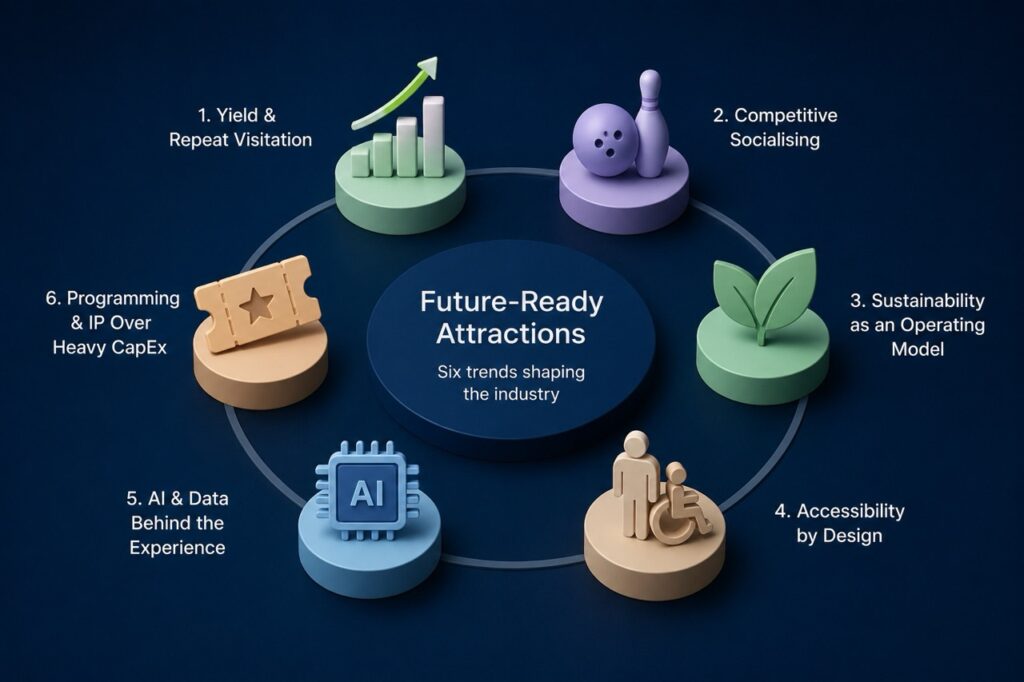
5. AI and Data Are Moving Behind the Experience
AI will remain visible across the attractions industry, but its most valuable uses may not be highly visible to guests. Data can improve capacity planning, staffing, pricing, maintenance, communication, marketing, and the movement of visitors through a venue.
One IAAPA Expo Europe 2026 session focuses on improving guest flow without building new infrastructure. Another examines how real-time data and cross-team collaboration can improve conversion and repeat visitation for museums and attractions.
This is a more practical direction than adding AI simply because it looks innovative. Technology should help operators make better decisions or remove friction from the visitor experience.
Discovery is also changing. Deloitte’s 2026 Travel Industry Outlook found that nearly one-quarter of surveyed travellers were using generative AI for trip planning by late 2025. Reported use had roughly tripled since 2023.
Attractions must now consider how they appear inside AI-generated recommendations, not only traditional search results. Accurate descriptions, current information, reviews, structured data, and distinctive visitor experiences will all influence discoverability.
6. Programming and IP Are Becoming Alternatives to Heavy Capital Spending
New rides and buildings can transform an attraction, but they also require significant capital and long development periods. More operators are using programming, partnerships, and intellectual property to create demand from assets they already own.
A water park session at IAAPA Expo Europe will examine adults-only days, senior programs, family wellness sessions, and themed evening events. The objective is to increase off-peak demand and serve specific audience groups without constructing another major attraction.
Another session looks at how intellectual property is expanding across sport, food, heritage, entertainment, and family experiences. The opportunity is larger than attaching a familiar character to an existing ride.
Strong programming gives people a timely reason to return. Strong IP gives an experience immediate meaning, but only when the partnership fits the venue and audience.
This shift also creates room for guest-led storytelling that extends a programmed experience beyond the visit. That supporting layer works only after the core experience and audience reason are already strong.
What These Attractions Industry Trends Mean for 2027
The attractions industry is not moving in one direction. Large destination parks, local museums, water parks, competitive socialising venues, heritage sites, and family entertainment centres face different economics.
However, several shared priorities are becoming clear. Growth will depend more heavily on repeat visitation, operational intelligence, inclusive design, weather resilience, flexible programming, and experiences that earn their place in a cautious household budget.
PwC’s Global Entertainment and Media Outlook 2026–2030 forecasts continued growth for live and immersive experiences as consumers seek valuable in-person activity. That demand is encouraging, but it does not guarantee success for every attraction.
Operators still need to create experiences that are distinctive, easy to access, commercially sound, and worth repeating. Technology should support those outcomes rather than become the outcome itself.
What IAAPA Expo Europe 2026 Really Represents
IAAPA Expo Europe 2026 is best understood as a picture of an industry moving from expansion at any cost toward more disciplined experience design.
The next phase will reward operators that can extract more value from existing assets while improving the visitor experience. Indoor entertainment, data-led operations, sustainable design, accessibility, IP, and targeted programming are all parts of that shift.
Visitor participation can support some of these experiences, but it should never be inserted without a clear purpose. Attractions exploring that layer are beginning to use browser-based video experiences that let visitors contribute without downloading another app.
The technology is secondary. The industry’s real challenge is creating experiences people choose, remember, and find worth returning to.